The story
Around 1500, people said “rule the roast,” not roost. The earliest known example comes from a poem called The Debate of the Carpenter’s Tools: “My mayster yet schall reule the roste.” By the 1530s it was in very common use.
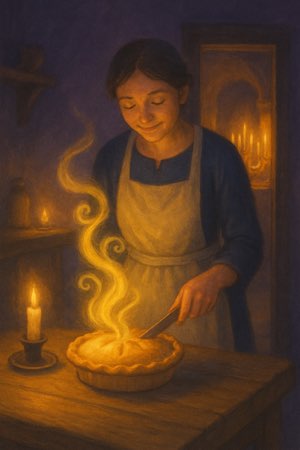
Why a roast? No one knows for sure. Maybe it meant the master of the house, who sat at the head of the table and carved the meat. Several 1600s writers tied it to the kitchen, where a cook might “rule the roast” in spite of the master. Even the Oxford English Dictionary says the early examples throw no light on the precise origin.
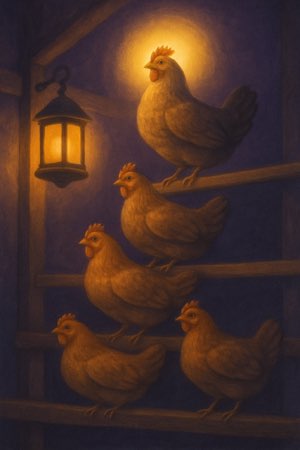
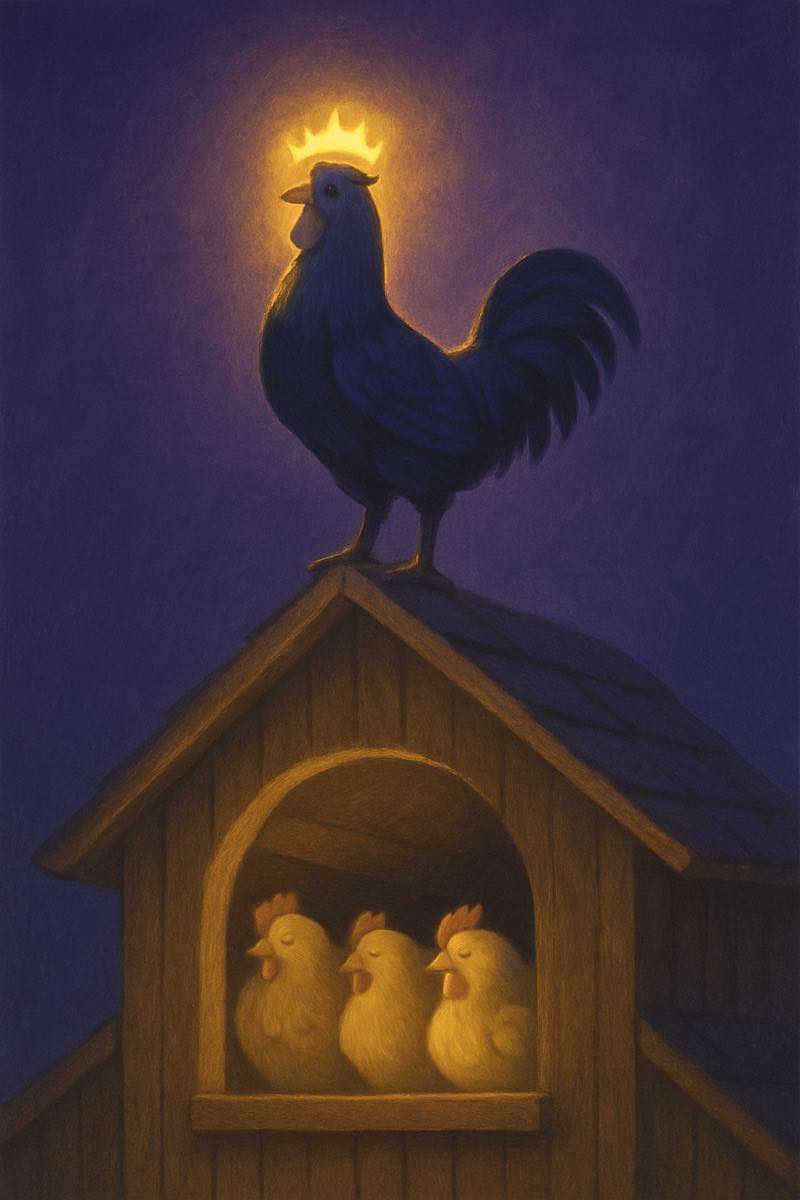
Then, in the late 1700s, the roost appeared. “Rule the roost” is recorded from 1769, and to many ears it made more sense: picture a proud rooster lording it over the henhouse.
The new version slowly won out. In 1926, the usage expert H. W. Fowler noted that “most unliterary persons say roost & not roast.”