The story
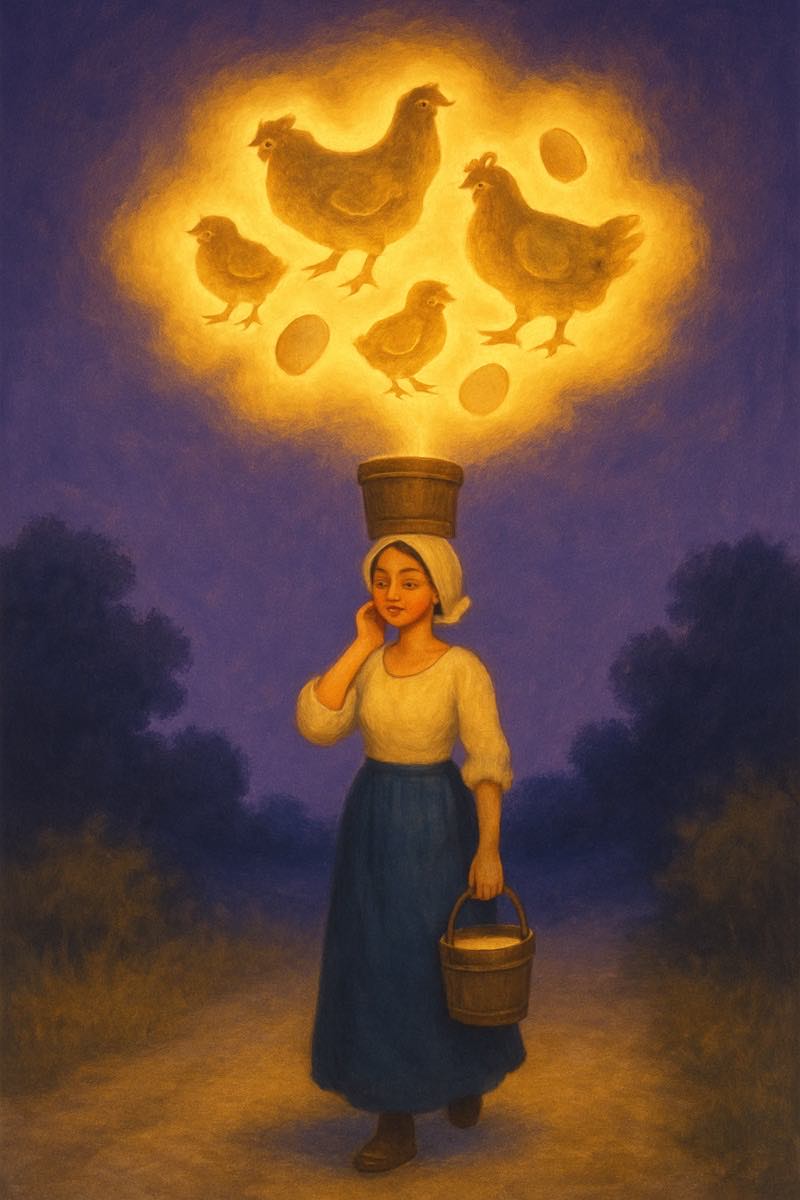
An old fable tells of a milkmaid carrying a pail of milk to market on her head. She dreams of the eggs she’ll buy with the money, the chickens they’ll hatch, and the fine dress she’ll wear. Then she tosses her head proudly, and the milk spills.
The tale is often credited to Aesop, but it isn’t his. That label was only added in the 1700s. Its roots run back to India, where an ancient story in the Panchatantra tells of a man who builds castles in the air over a pot of grain—and knocks it over.
In English, the warning was already in print in 1570. The poet Thomas Howell wrote, “Counte not thy Chickens that vnhatched be, Waye wordes as winde, till thou finde certaintee.”
In 1664 Samuel Butler gave it a rhyme in his comic poem Hudibras: “To swallow gudgeons ere they’re catch’d, And count their chickens ere they’re hatched.” The rhyme helped it stick.