The story
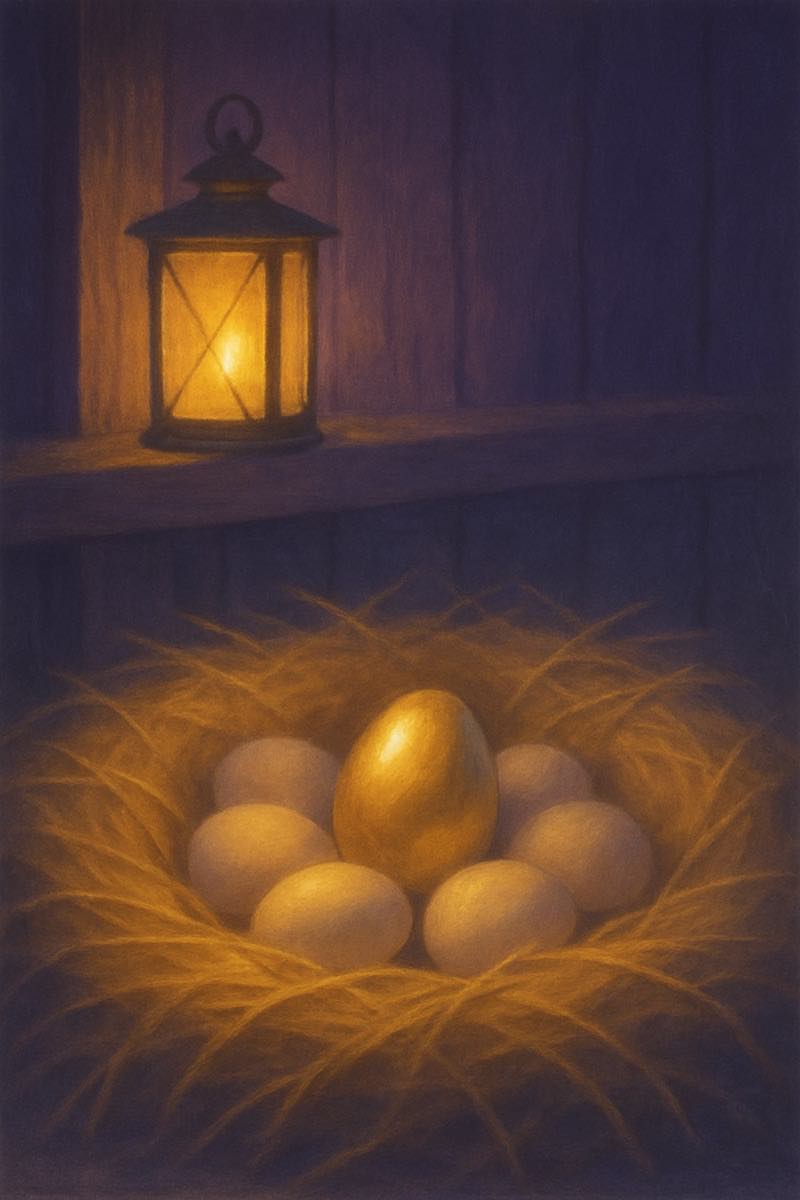
Long before savings accounts, farmers had a simple trick. To coax a hen to keep laying in the same spot, they left an egg in her nest. Sometimes it was a real egg. Sometimes it was a china one that never hatched at all.
A hen that found an egg already waiting took the nest as a good, safe place to lay. The farmer got a steady supply in one spot instead of eggs scattered around the barn. The practice is recorded as far back as the 14th century.
People soon saw the likeness to money. A small sum tucked away seemed to draw more to it, the way one egg drew a whole clutch. By 1686, a letter writer was talking about money that should “remain as a nest egg till a farther occasion.”
No one knows exactly which part of the picture people had in mind. One idea is that the first egg could be taken back once the hen had laid, just as savings are there to be used when the time comes.