The story
Thorleif Schjelderup-Ebbe was born in Kristiania, now Oslo, Norway, in 1894. His family kept a country place outside the city, and as a small boy he became fascinated by the chickens there. By the age of ten he was filling notebooks with diagrams of the flock.
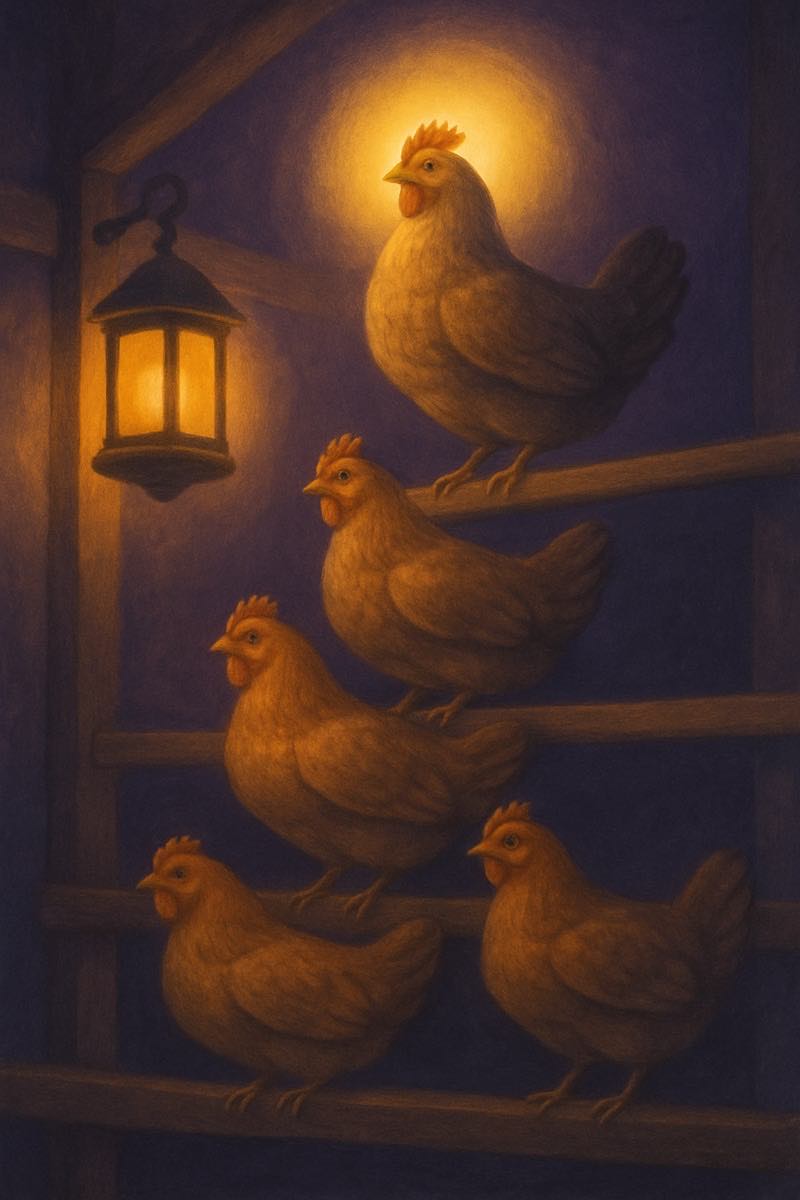
What he saw was a clear social ladder. Each hen knew which birds she could peck without being pecked back, and which birds she had to give way to. Once one hen lost a squabble to another, she usually stayed beneath her. The top bird held her place with the occasional sharp reminder.
As a grown scientist, he wrote up these observations in his doctoral work in the early 1920s. He called the ranking a Hackliste, a “peck list,” and it became known in German as Hackordnung. English writers translated it as the pecking order.
The phrase did not stay in the henhouse for long. It turns up in an English translation about animal societies in 1927, and by 1929 an American newspaper was using it for people, describing who ranked where at a Washington dinner table.