The story
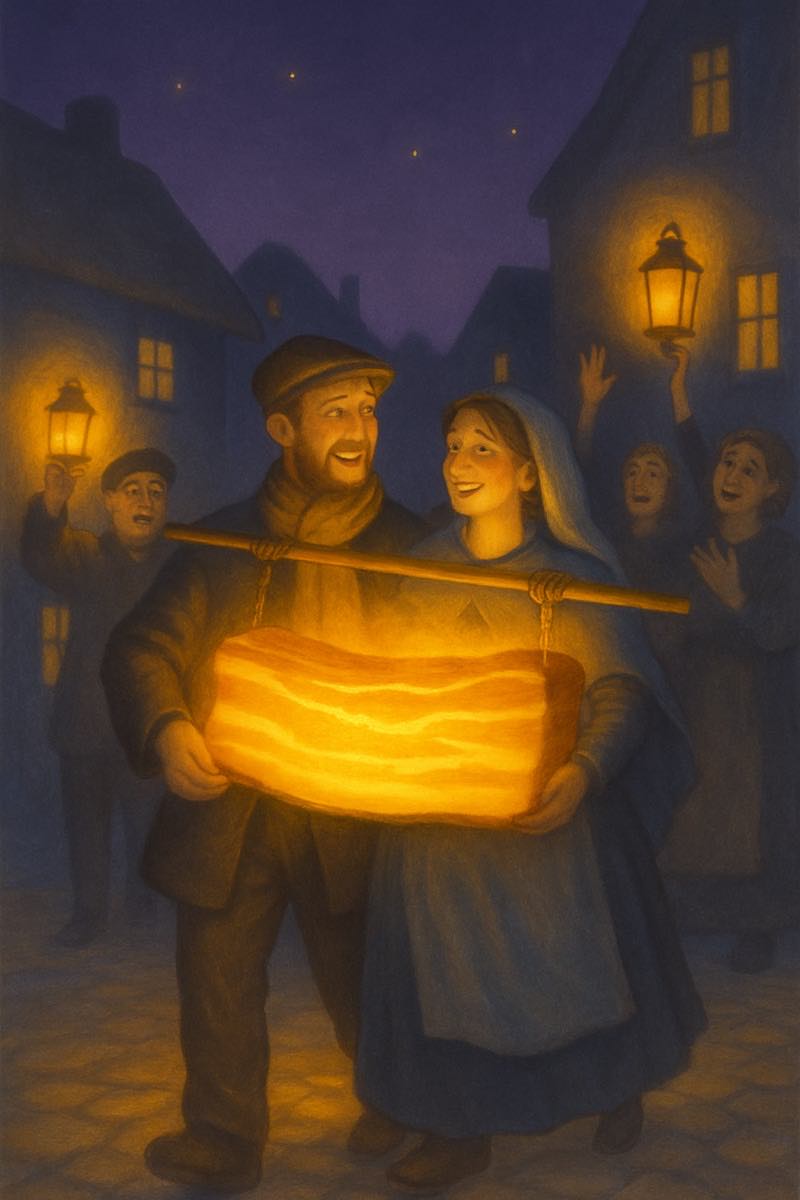
In the Essex village of Dunmow, England, there is a custom that goes back many centuries. A married couple who can convince a jury that they have lived in harmony for a year and a day wins a flitch—a whole side—of bacon.
The prize is old enough that Geoffrey Chaucer mentions it around 1395, in The Wife of Bath’s Prologue: “But never for us the flitch of bacon though, / That some may win in Essex at Dunmow.” Records tie the custom to the priory at Little Dunmow, with the traditional date given as 1104. The Dunmow Flitch Trials are still held today, every four years.
It would make a perfect origin story. A couple wins the bacon and carries it home in triumph. But the phrase “bring home the bacon” doesn’t show up in print for hundreds of years after Chaucer.
The first known uses come from the United States in 1906, in newspaper sports pages. From there it spread, and by the middle of the century it meant earning the household’s living. Dunmow’s bacon is real history. It just isn’t this phrase’s history.