The story
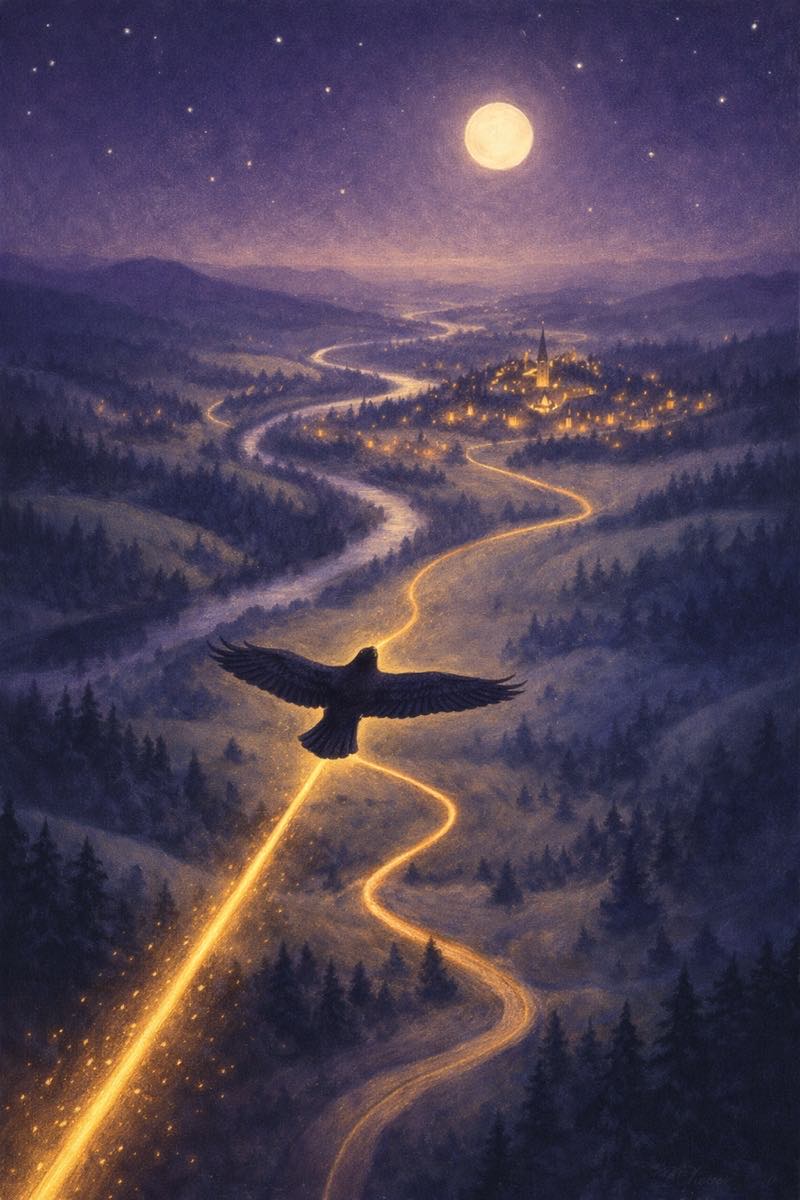
On the ground, getting from one town to the next means following the road: around hills, along rivers, over bridges. A bird does not bother. It simply goes. That is the picture in as the crow flies: the distance in a straight line, with every bend taken out.
The earliest example word historians have found is from a Dublin magazine in December 1761. Describing land in North America, it said the country was “upwards of 400 miles broad, and above 600 long, each as the crow flies.” By the 1770s, English newspapers were using it to give the distance between towns.
Scotland had its own version. There, the crow road meant the most direct route, and a 1795 Scottish report mentions a Crow road while making the case for straighter roads that cost less to keep up.
One popular story says sailors kept crows on board and let one go to find land, since the bird would head straight for shore. No one has found evidence for it, and every early use of the phrase is about distances on land.
And there is a twist. Crows do not really fly in especially straight lines. They often circle above their nests and roam while they hunt for food. Still, next to a winding country road, even a wandering crow takes the short way.