The story
Today a wild-goose chase sounds like running after birds you’ll never catch. In Shakespeare’s time, it meant something else entirely: a kind of horse race.
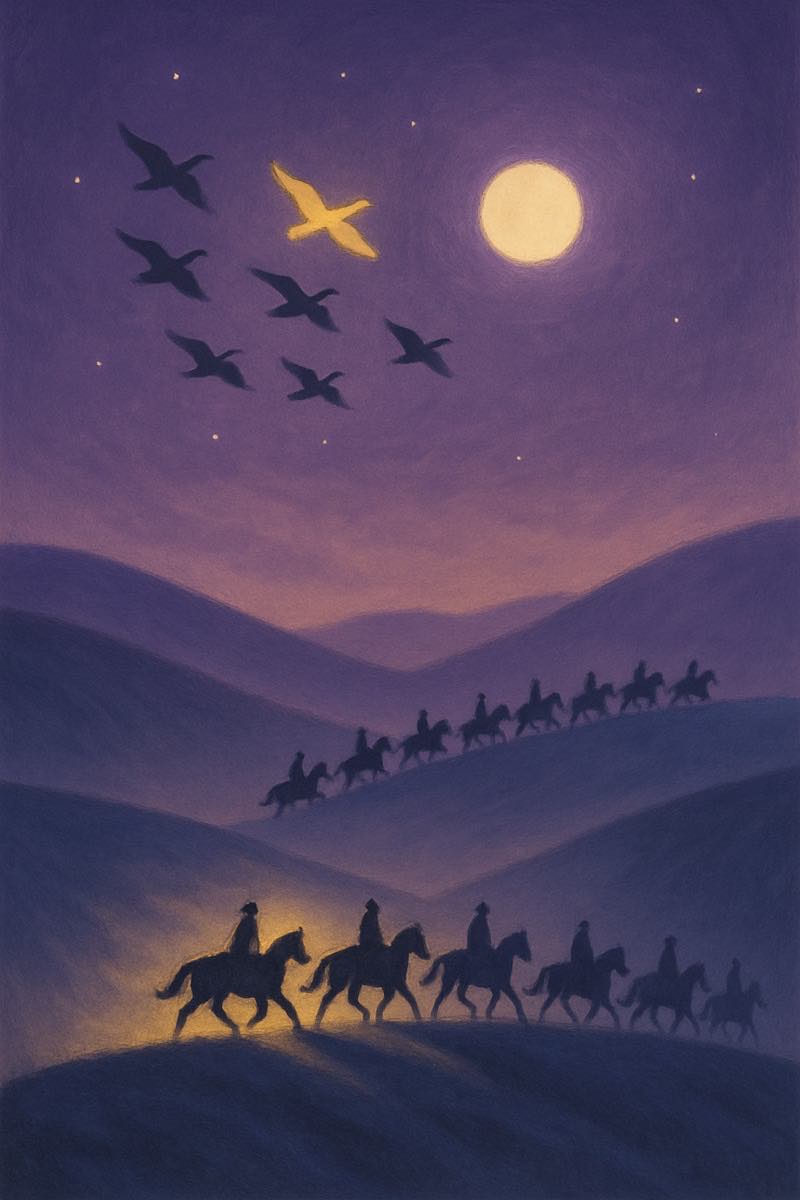
In 1593, Gervase Markham described the race in A Discourse of Horsmanship. One rider took the lead, and “the hindmost Horse is bound to follow the formost,” copying his every move, much as wild geese follow their leader in flight. The lead rider might suddenly “wheele him suddainlie halfe about,” trying to wear out the horses behind.
Shakespeare used the race for a joke. In Romeo and Juliet, Romeo and Mercutio trade quick wordplay, each trying to top the other. Mercutio gives up: “if thy wits run the wild-goose chase, I have done, for thou hast more of the wild-goose in one of thy wits than, I am sure, I have in my whole five.”
Over time the race faded and the image changed. By 1811, Francis Grose’s dictionary of slang defined a wild-goose chase as “A tedious uncertain pursuit, like the following a flock of wild geese, who are remarkably shy.” That is the sense that lasted.