The story
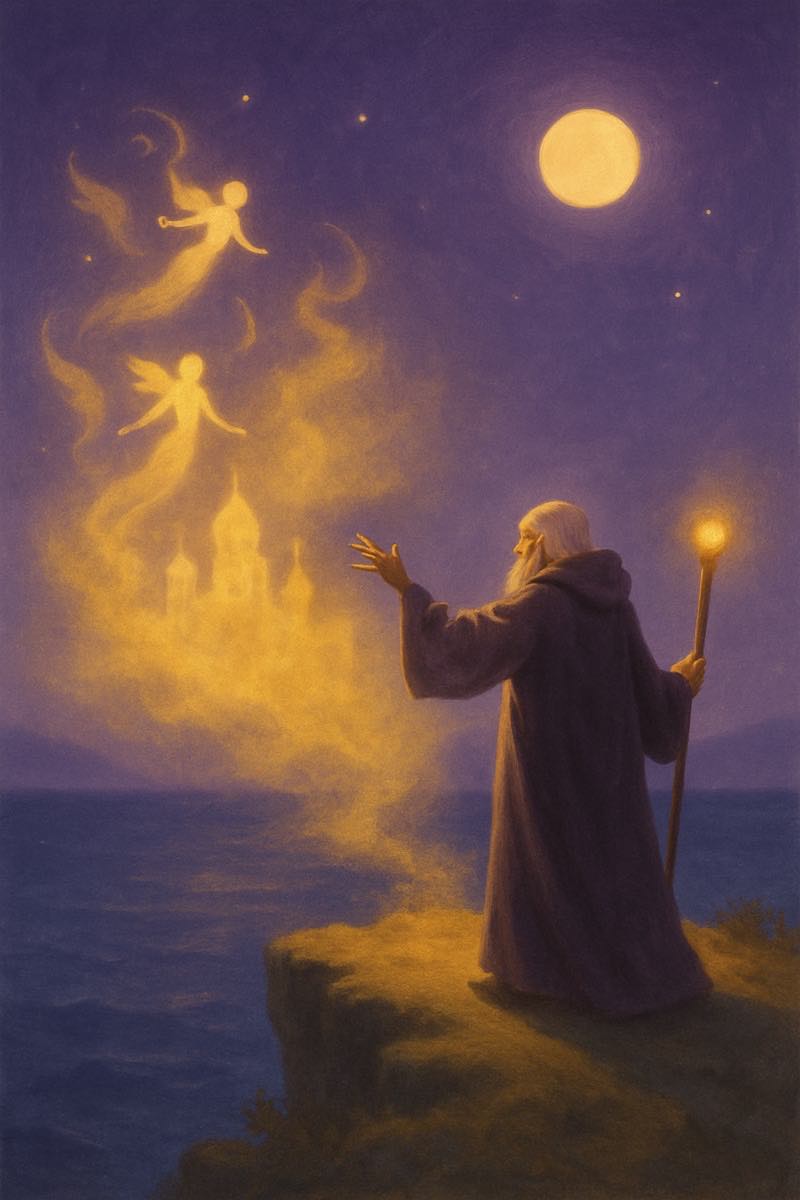
In The Tempest, written around 1610, the magician Prospero conjures a show of spirits to celebrate the engagement of his daughter Miranda. In the middle of it, he ends the show as suddenly as it began.
Then he explains what happened. “These our actors, as I foretold you, were all spirits and are melted into air, into thin air.” The players, the scene, even the grand towers he describes, all simply fade.
Shakespeare had come close to the phrase a few years earlier, in Othello, but this is where it took its familiar shape. Melting into thin air was a perfect picture of magic ending: no smoke, no noise, just gone.
Later writers kept the air and added the vanishing. A Scottish poet wrote of things that “vanish into air” in 1807, and by 1822 an Edinburgh newspaper was using the full “vanish into thin air.” Today things disappear into thin air all the time.