The story
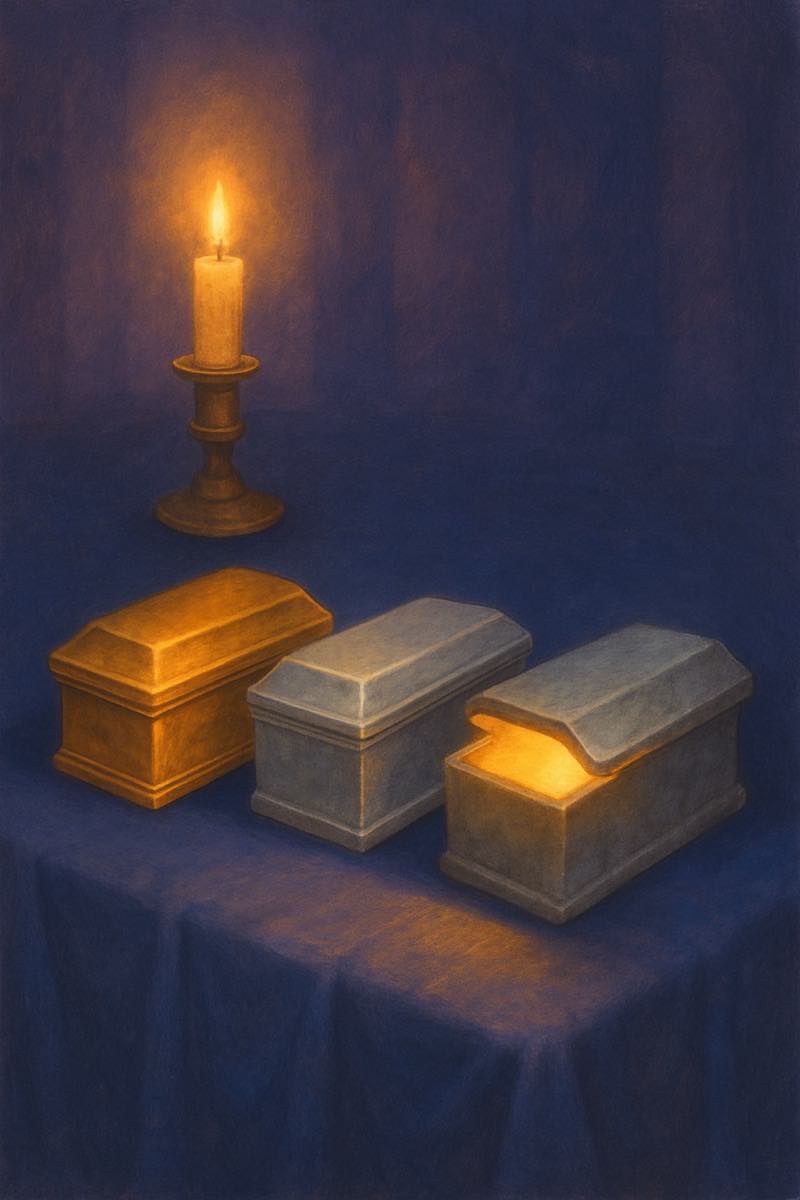
In The Merchant of Venice, written in the 1590s, the wealthy Portia can only marry the suitor who chooses the right one of three caskets: gold, silver or lead. The Prince of Morocco picks the gleaming gold one, sure it must hold the prize.
Inside he finds a scroll with a hard lesson. It begins, “All that glisters is not gold— / Often have you heard that told.” Glisters was simply an older word for sparkles. The right casket, it turns out, is the plain lead one.
Notice the second line. Even Shakespeare’s scroll admits the audience had heard this before. Geoffrey Chaucer wrote “Hit is not al gold, that glareth” around 1380, and a 12th-century French writer, Alain de Lille, gave the same warning long before that.
Over time the rarer word glisters gave way to glitters. The poet John Dryden was already writing “All, as they say, that glitters, is not gold” in 1687, and that is the version most people say today.