The story
The earliest known use is in Shakespeare’s The Merchant of Venice, written in the 1590s. Shylock, the moneylender, is angry at a man who has insulted him and now wants a loan. He asks scornfully whether he should bow low and speak “with bated breath and whispering humbleness.”
“Bated” is a shortened form of “abated,” meaning lowered, held back or held down. To speak with bated breath was to speak softly and meekly, with the breath held in.
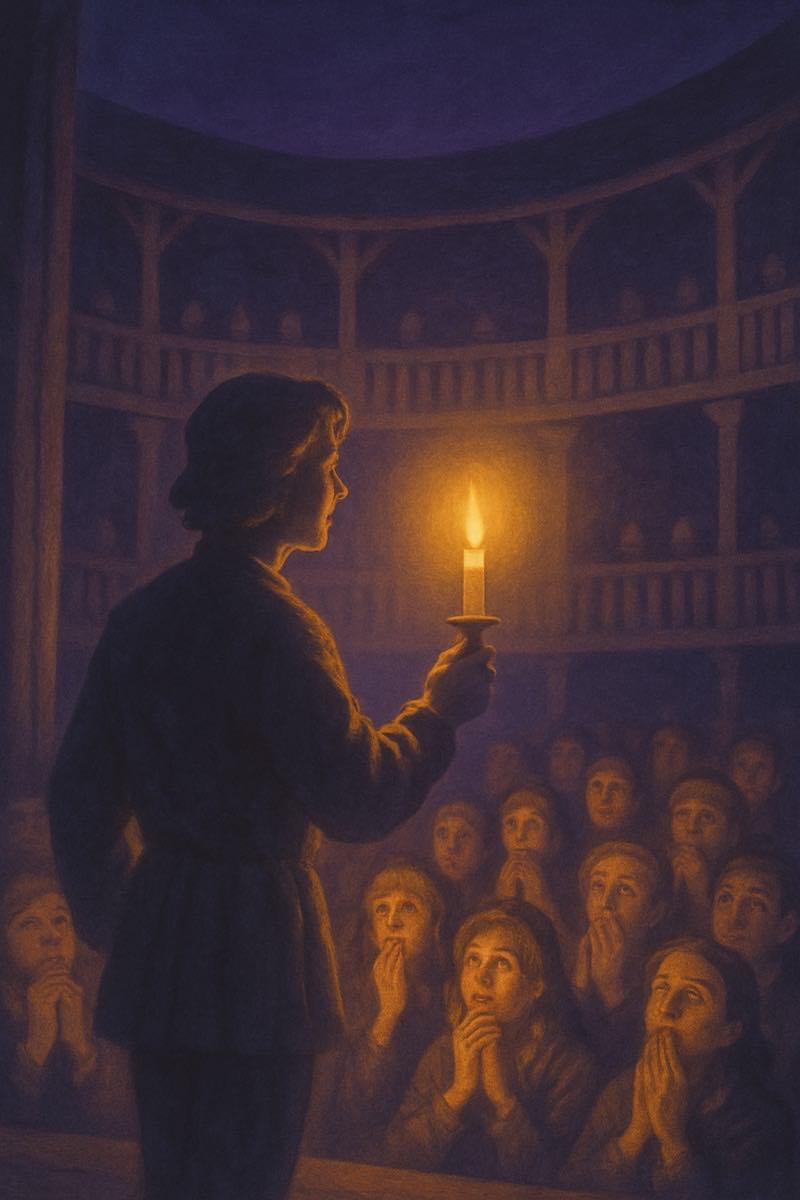
Over time the phrase moved from humility to suspense. When a crowd waits with bated breath, people are so caught up in what will happen next that they almost forget to breathe.
Shylock’s line is bitter. He is mocking the idea that he should cringe before a man who has spat on him. The phrase that now describes a thrilling wait began as a picture of forced politeness.
Because “bate” is a word few people use anymore, the phrase is often misspelled “baited breath.” There’s no fishing hook or bait here, just a breath held still.