The story
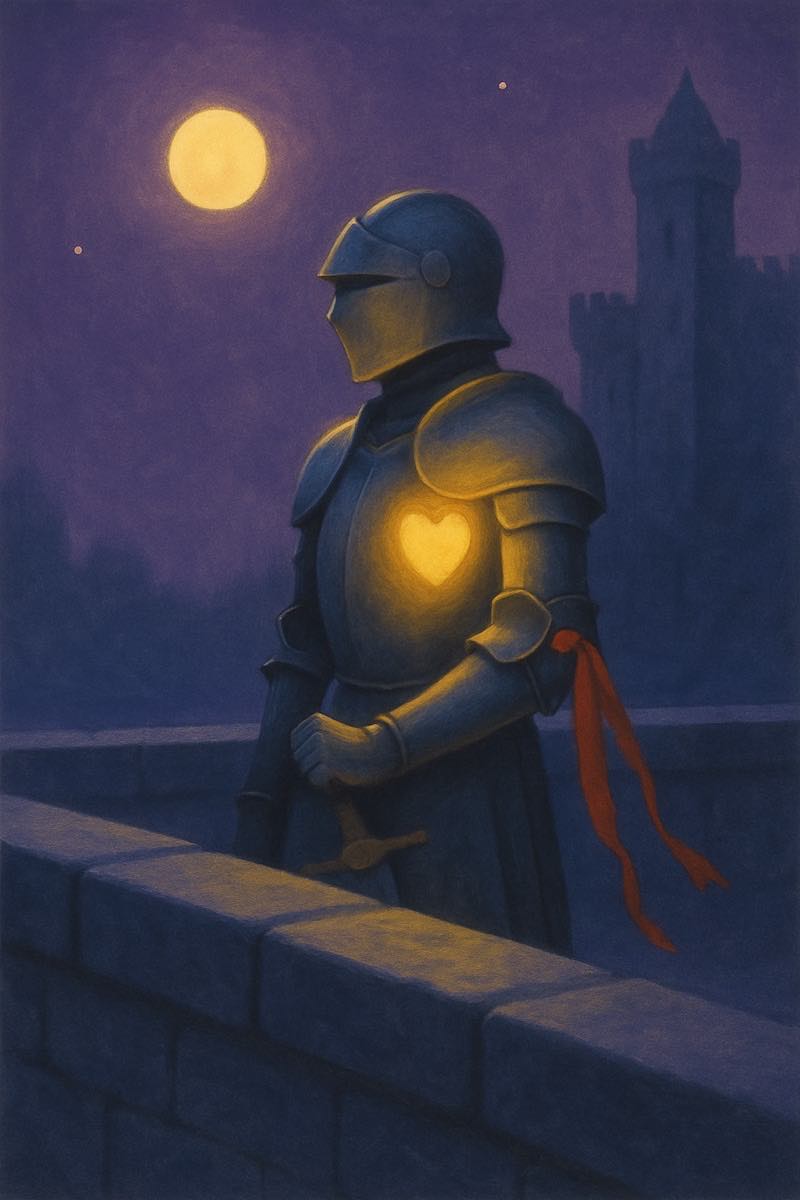
One popular story says the saying began with medieval knights. Before a joust, a knight might tie a ribbon or cloth in his lady’s colors around his arm, showing everyone whose favor he carried. It is a lovely picture, but no one has found proof that it gave us the phrase.
What we do know is where it first appears in writing: Shakespeare’s Othello, from 1604. Early in the play, the soldier Iago explains how he plans to fool everyone around him.
If he ever let his true face show, Iago says, “I will wear my heart upon my sleeve / For daws to peck at: I am not what I am.” In other words, showing his real feelings would leave him as exposed as a scrap of food to pecking birds.
The twist is that Iago is the play’s great schemer. He uses the image of open feeling while hiding his own plans completely. Over time, though, the phrase shed its sly beginnings and came to mean just what it says: letting your feelings show.