The story
A red herring started out as just that: a herring smoked until it turned reddish-brown. The name for this strong-smelling fish goes back to medieval times.
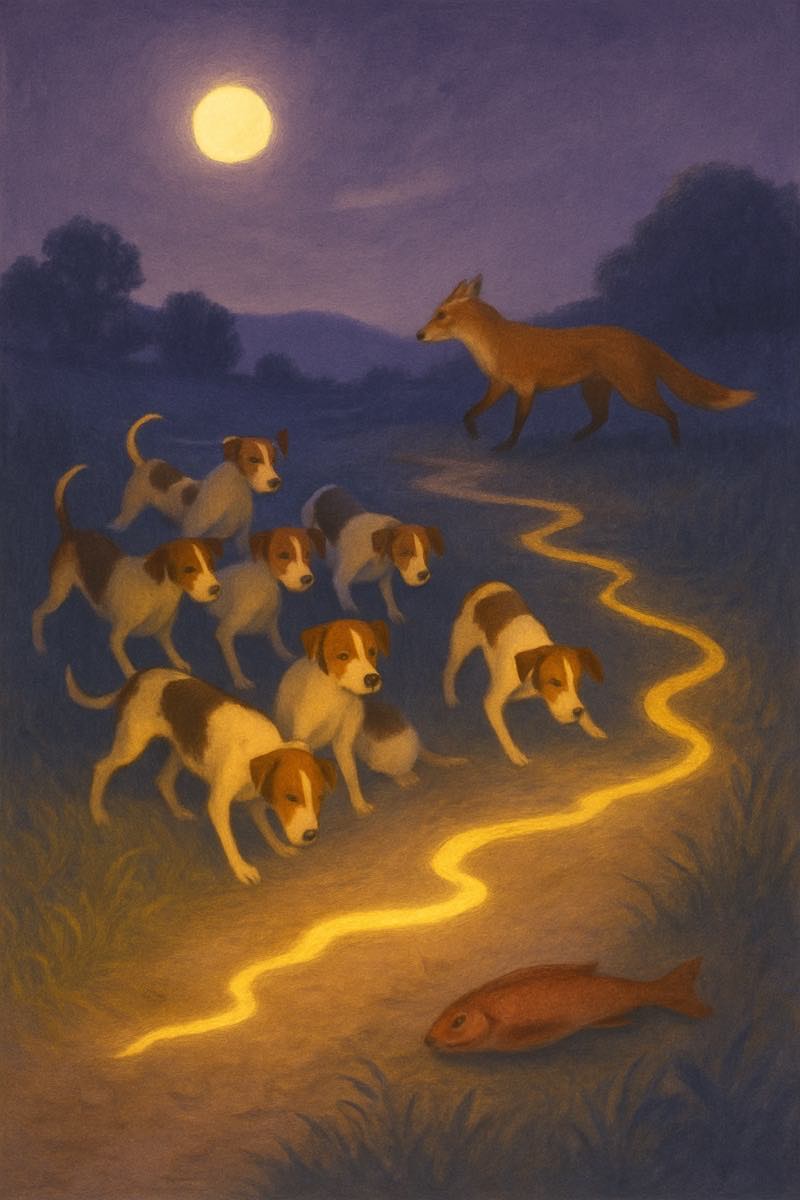
Hunters did use smelly bait in training. In 1599 Thomas Nashe wrote that, to draw hounds onto a scent, “to a redde herring skinne there is nothing comparable.” A fish dragged along the ground left a trail young dogs could learn to follow.
The twist came in 1807. The English writer William Cobbett told how, as a boy, he would “drag a red-herring, tied to a string, four or five miles over hedges and ditches” to pull hounds away from the hare they were chasing. He used the tale to scold newspapers that had been thrown off a story by a false lead.
There is no good evidence that anyone actually used herrings to throw hounds off a trail. Language scholars think Cobbett likely made the story up to make his point. But it caught on. Before long, any false lead was a red herring.