The story
There was a time when “between the lines” meant exactly that. One simple way to send a secret was to tuck it into the empty spaces of an ordinary-looking letter.
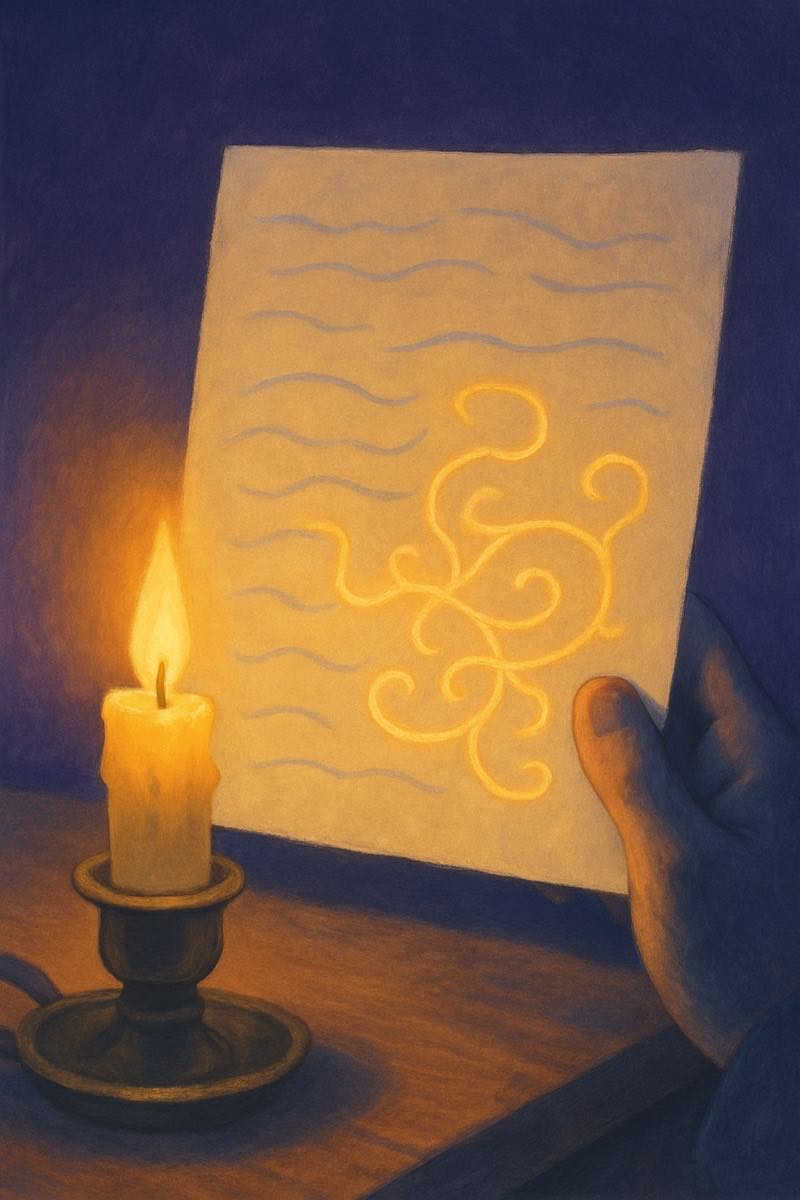
The sender wrote a harmless note in plain ink. Then, between its lines, came a second message in invisible ink—often a liquid that darkens when warmed. To anyone else, it was just a letter. To the reader who knew to hold it near a flame, it said much more.
By the middle of the 1800s, the phrase had moved from spy craft to everyday thinking. In August 1862, The New York Times puzzled over a dispatch from Britain’s Foreign Secretary, writing that “the only resource we have is, as best we may, to ‘read between the lines’ of this puzzling, but important, communication.”
Notice the quotation marks the Times put around it. The phrase was still fresh enough to need them. Before long, people were reading between the lines of speeches, letters and polite conversations—anything that seemed to hold more than it said.