The story
In 1814, the Russian fable writer Ivan Krylov told the story of an inquisitive man back from a museum. He has studied every tiny butterfly and beetle on display, and he describes them in loving detail. Then a friend asks about the elephant. He admits he never noticed it.
The fable became so well known in Russia that the novelist Fyodor Dostoevsky could mention it in passing. In his novel Demons, he wrote of a critic who “was just like Krylov’s Inquisitive Man, who didn’t notice the elephant in the museum.”
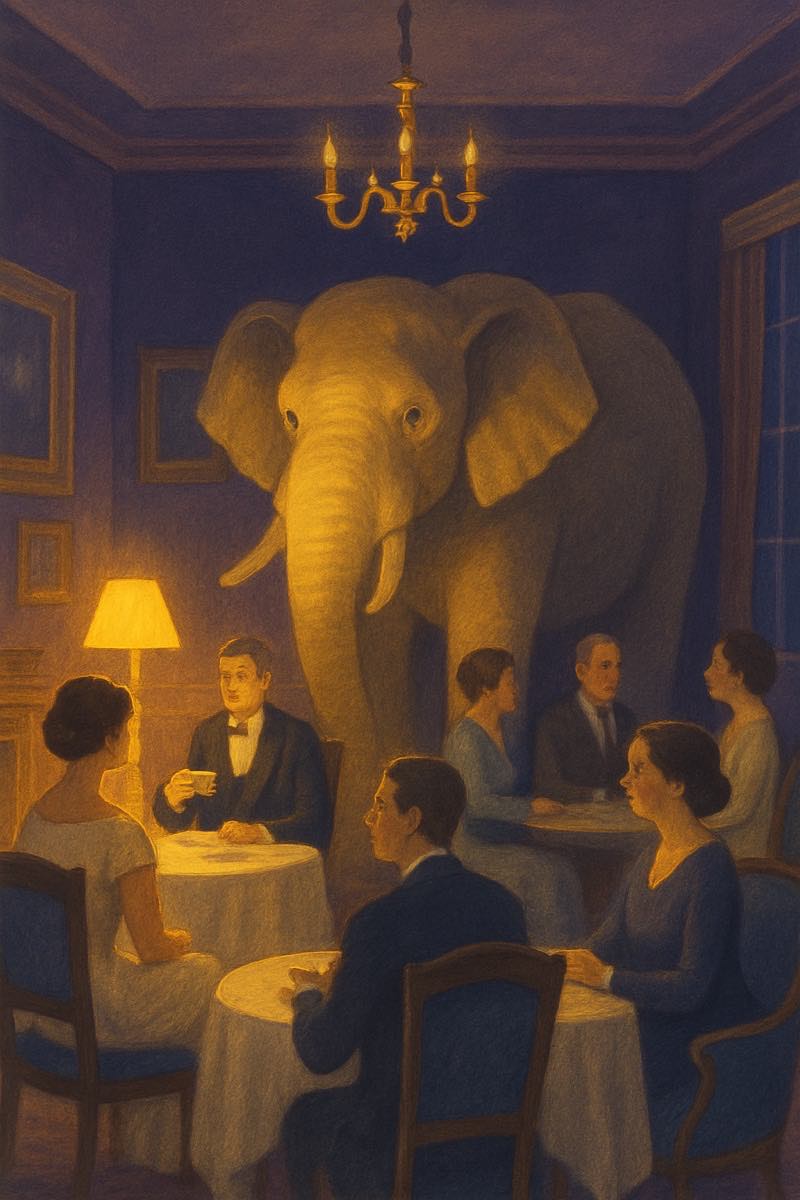
No one knows for sure whether the English phrase grew from Krylov’s fable. Word sleuths trace it to the United States in the 1950s. In 1959, The New York Times wrote that “Financing schools has become a problem about equal to having an elephant in the living room. It’s so big you just can’t ignore it.”
Later, the phrase took on a sharper meaning. In the 1980s it was often used for a family problem that everyone could see but no one would name. Today it covers any huge, awkward subject that a whole room is politely stepping around.