The story
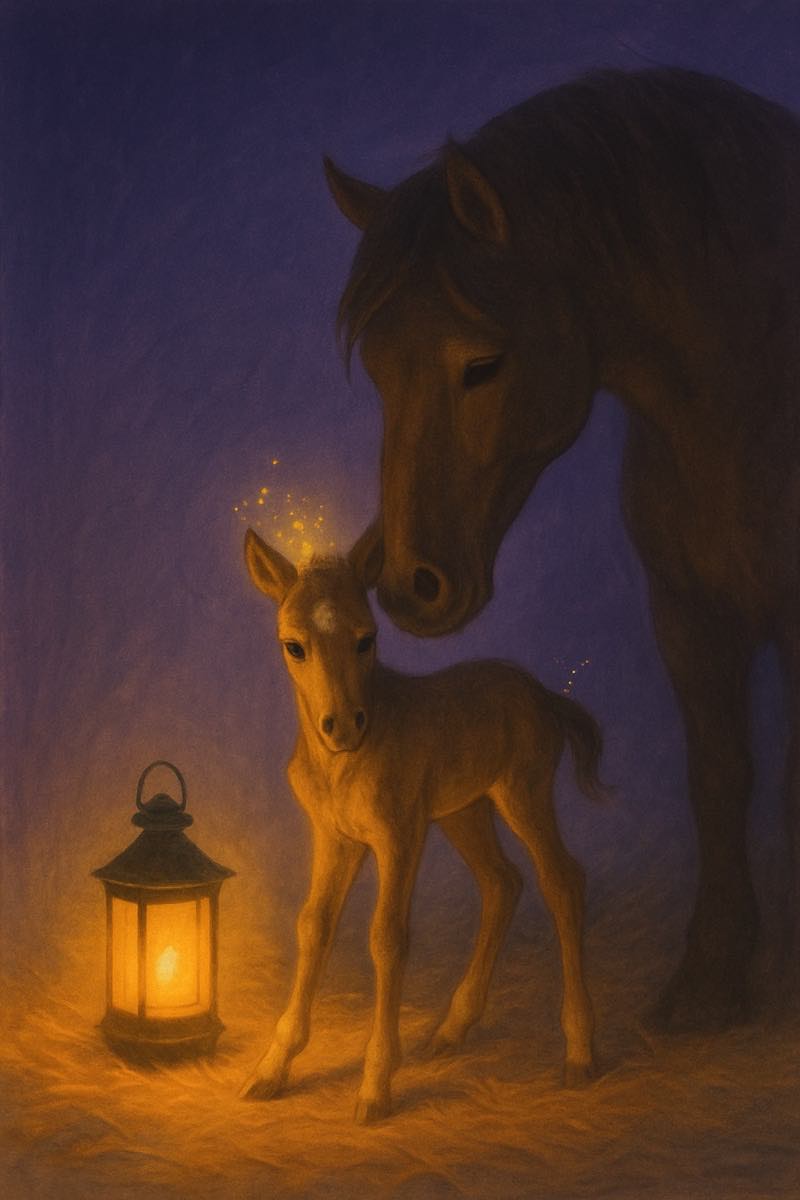
A newborn calf or foal comes into the world wet all over. As it finds its legs, it dries off bit by bit. The last place to dry is the little hollow behind each ear.
So anyone still damp there has only just arrived. That simple farmyard picture became a way to describe someone fresh, untested and new to the world.
The saying started in German. By the 1640s, Germans called a youngster noch nass hinter den Ohren—“still wet behind the ears.” By the early 1700s they also had the flip side: not yet dry behind the ears.
English borrowed the dry version first. A Philadelphia newspaper, the Port Folio, printed “he is not yet dry behind the ears” in 1802. The wet version followed in 1851, when the Boston Daily Atlas described a student “still wet behind his ears.”
Some say the image comes from newborn babies rather than animals. Either way, the idea is the same: you can tell how new someone is by how damp they still are.