The story
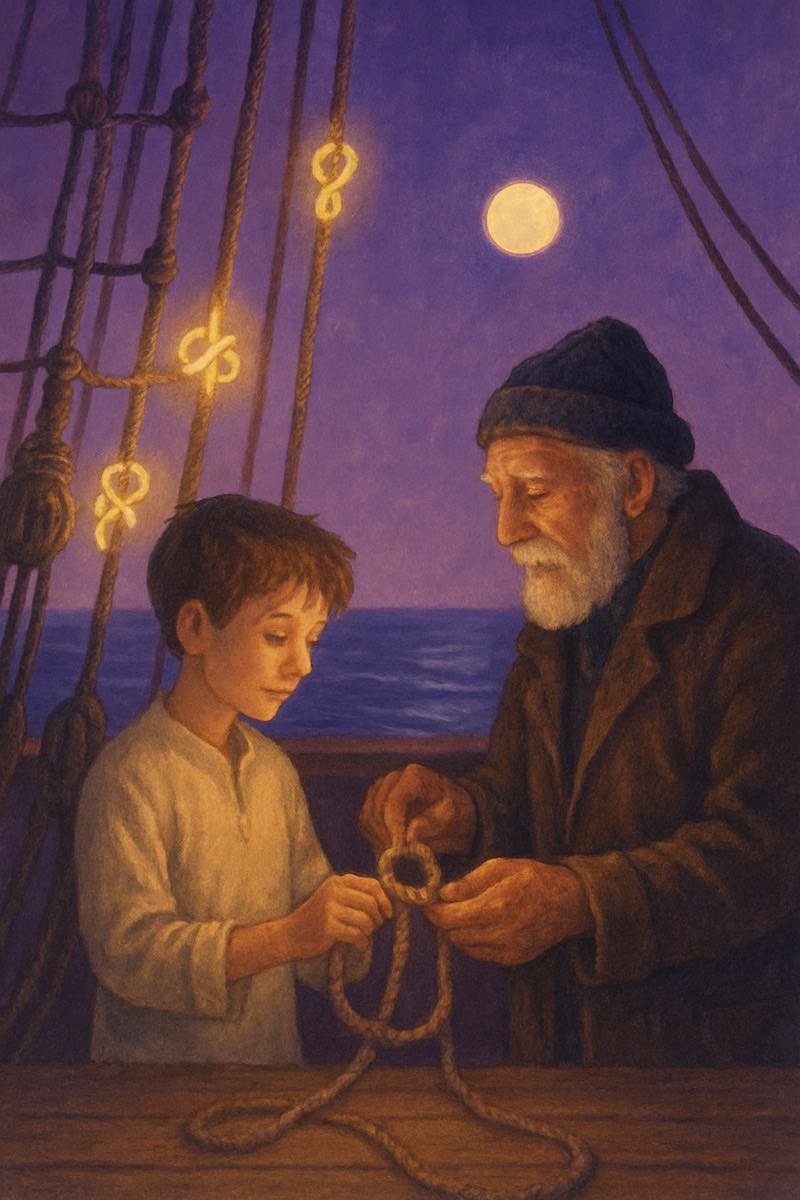
A big sailing ship carried a maze of rigging: lines to raise the sails, lower them, turn them and hold them fast. Each rope had its own job, and a sailor had to know them by heart, in the dark and in a storm.
So a new hand’s first lesson was learning the ropes. Someone who had mastered them knew the ropes and could be trusted on deck.
The phrase was already moving ashore by 1802, when a travel journal includes the line, “You know the ropes and can give me good advice.” At sea it stayed at home: in Richard Henry Dana’s 1840 memoir Two Years Before the Mast, a captain who had been on the coast before “knew the ropes.”
The theater has a rival claim, since stagehands also work a forest of ropes, and an 1850 book about opera-goers mentions a belle who “has ‘learned the ropes.’” Most word historians still favor the sea.