The story
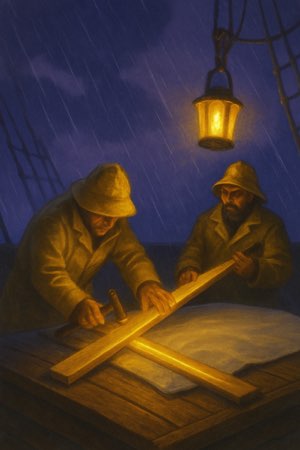
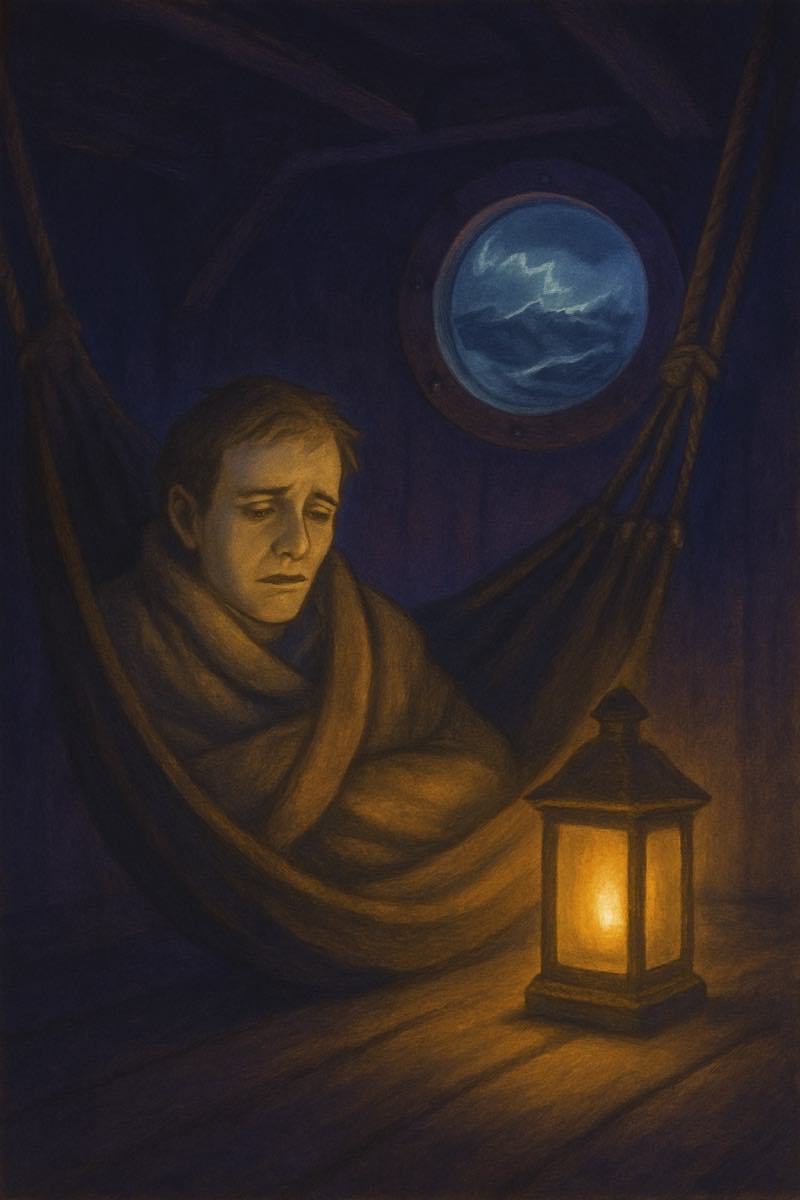
At sea, “weather” has a special meaning. The weather side of a ship is the side the wind blows against, where spray and rough water hit hardest.
One popular story says that seasick sailors were sent below decks, under the weather bow, to ride out a storm. It’s a nice picture, but no one has found early examples to back it up. The Phrase Finder calls the tale widely repeated but poorly supported.
The sea roots themselves are real. In 1627, Captain John Smith’s Sea Grammar told how a ship could “lie at ease vnder the Sea” when sheltering from a storm. A New York newspaper in 1786 described ships that “might have had safe anchorage under the weather.”
Then the phrase came ashore. In 1803, a Philadelphia paper used it to mean someone in a fix. By 1815, a Kentucky newspaper wrote of “a brother, who had been under the weather” and had recovered. Feeling under the weather had come to mean feeling poorly.