The story
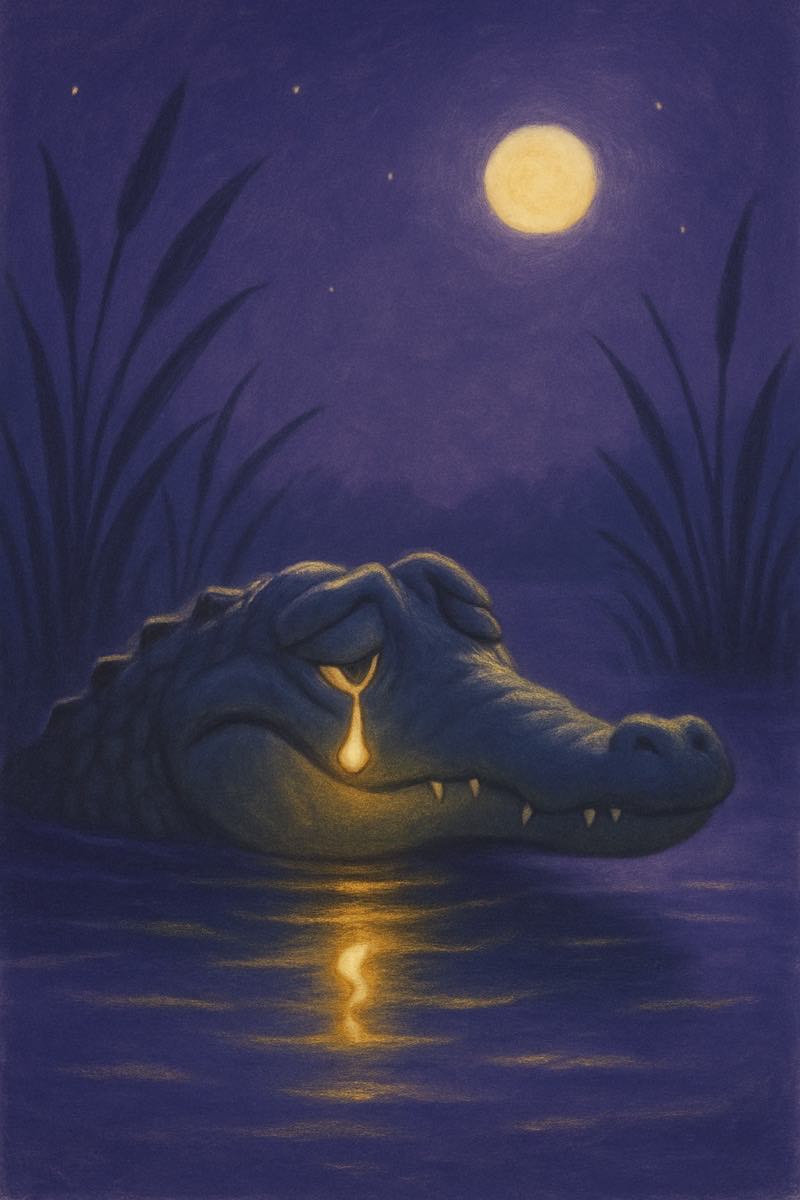
The idea is ancient. The Greek writer Plutarch compared the crocodile to people who wish for someone’s ruin and then mourn them in public.
In the Middle Ages, the popular travel book credited to Sir John Mandeville spread the tale further. Crocodiles, it said, eat their prey “weeping.”
By the 1500s, English speakers were calling any false sorrow crocodile tears. Shakespeare used the image more than once. In Henry VI, Part 2, he wrote of “the mournful crocodile” whose sorrow snares kind passersby.
Here is the odd part: the old story holds a grain of truth. In 2007, researchers watched seven alligators and caimans eating at the St. Augustine Alligator Farm in Florida. Five of them teared up while they ate.
The tears weren’t sorrow, of course. The scientists suggested that air forced through the animals’ sinuses while feeding may stir up their tear glands.