The story
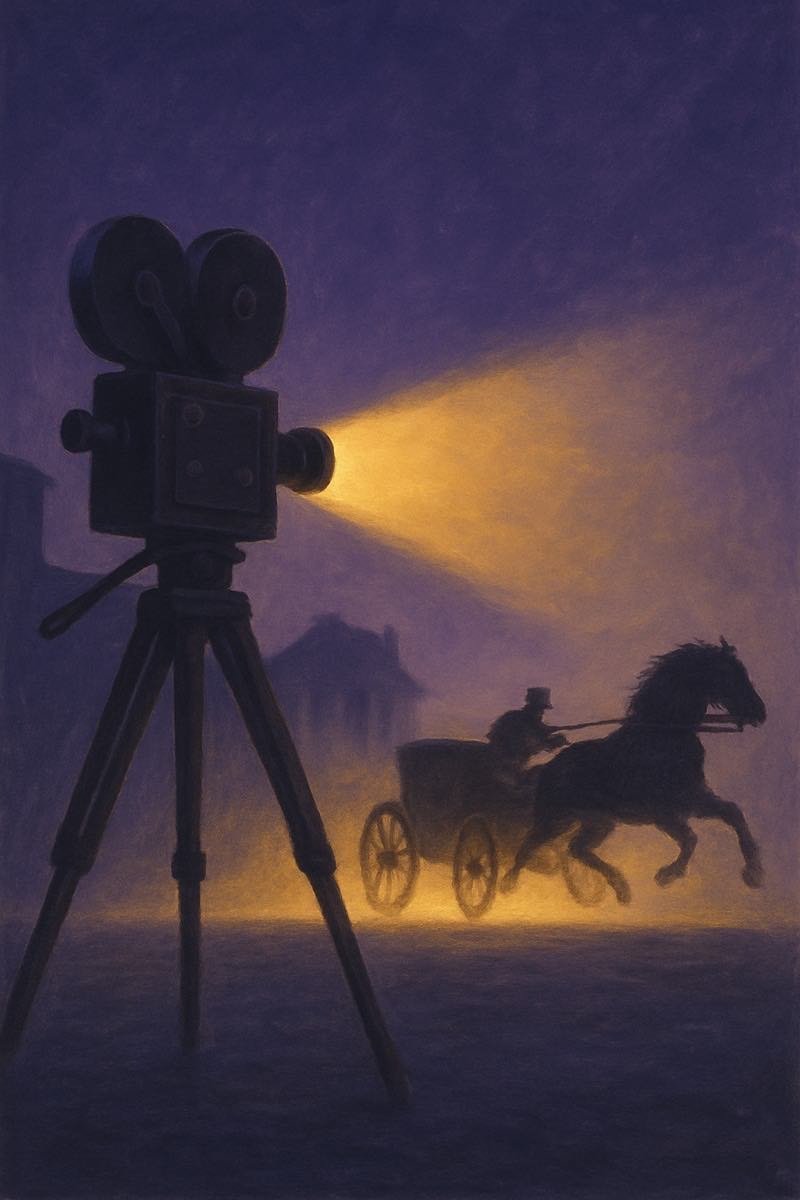
Early movies loved a good chase: horses, cars, heroes and villains racing across the screen. In film work, a cut is the jump from one shot to the next, and scripts used the word as an instruction.
Silent films had no spoken dialogue to carry the story, so action did the work. A slow scene could be rescued by a jump straight into the pursuit, and that editing-room habit is the picture behind the phrase.
The phrase turns up in a 1929 novel about the movies, J. P. McEvoy’s Hollywood Girl, as a script direction: “Jannings escapes… Cut to chase.”
Writers soon used it as advice. In 1944, the screenwriter Helen Deutsch was quoted with the motto “When in doubt, cut to the chase.” When a story sags, skip to the part the audience came for.
By 1947 the phrase had left the studios, showing up in newspapers to mean simply: get to the point.