The story
For centuries, backgammon and its cousins went by a simpler name in English: “tables.” The name came from the Roman tabulae, and the game was a favorite pastime across medieval Europe. Chaucer mentions people playing “ches and tables” in The Canterbury Tales.
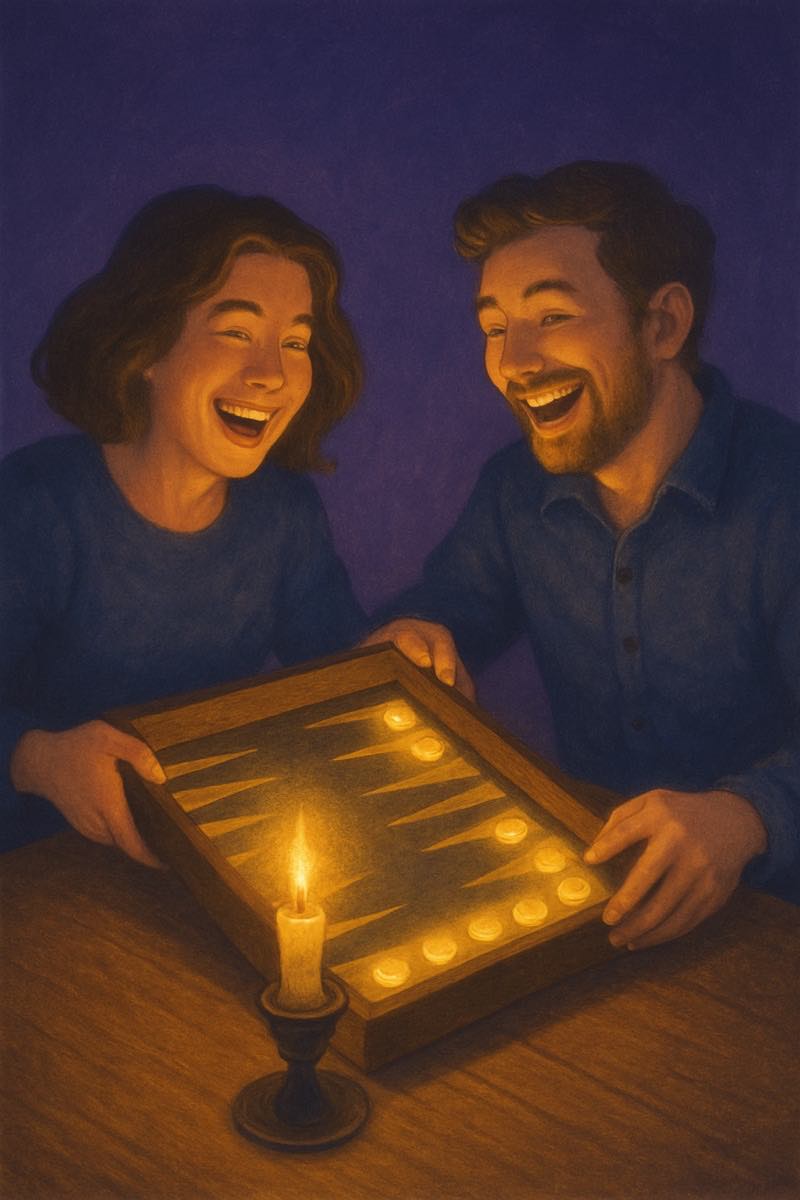
The board was made of two hinged halves, and players sat on opposite sides. Turning the board around reversed each player’s position, so the one who had been in the stronger spot now faced the weaker one.
English writers took that move into everyday life early in the 1600s. In a 1612 comedy, The Widdowes Teares, George Chapman has a character warn, “I may turne tables with you ere long.” In other words: enjoy it while it lasts, because the roles are about to switch.
A few decades later, Bishop Robert Sanderson used it in a sermon to teach fairness: “Whosoever thou art that dost another wrong, do but turn the tables: imagine thy neighbour were now playing thy game, and thou his.”