The story
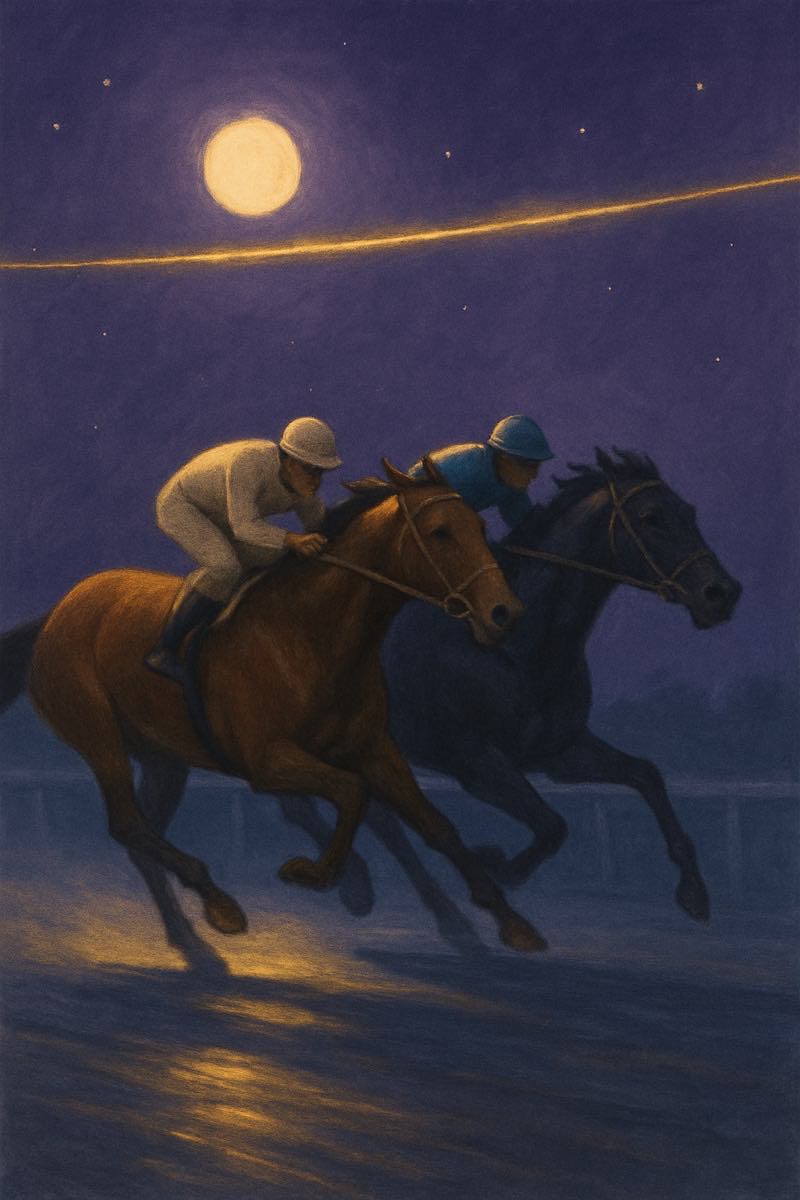
In the late 1800s, American racetracks strung a wire across the track, high above the finish line. It gave the judges a sharp mark to watch, so they could tell which horse got there first.
When a race stayed close all the way, the horses ran “down to the wire.” Scribner’s Magazine described one such finish in July 1889: “the two raced down to the ‘wire,’ cheered on by the applause of the spectators.”
A wire was easy to see from the judges’ stand, even with a field of horses thundering beneath it. In a tight finish, the judges’ eyes stayed fixed on that thin line overhead.
There was a second wire at the starting post too. A horse that led from start to finish won “wire to wire.”
Racetracks also gave us “under the wire,” for anything finished at the last possible moment. In time, all three phrases left the track for offices, elections and kitchens.