The story
“Par” is a Latin word meaning equal. English first used it in money matters. In 1601, the “par of exchange” meant the fair rate between two countries’ currencies.
By the early 1700s, par also meant the face value of a share or bond. A share sold “at par” fetched its face value; “above par” meant more, “below par” meant less.
From there, par slipped into everyday talk about how people felt. In 1776, Lady Hester Newdigate wrote that her spirits were “rather above than below par.”
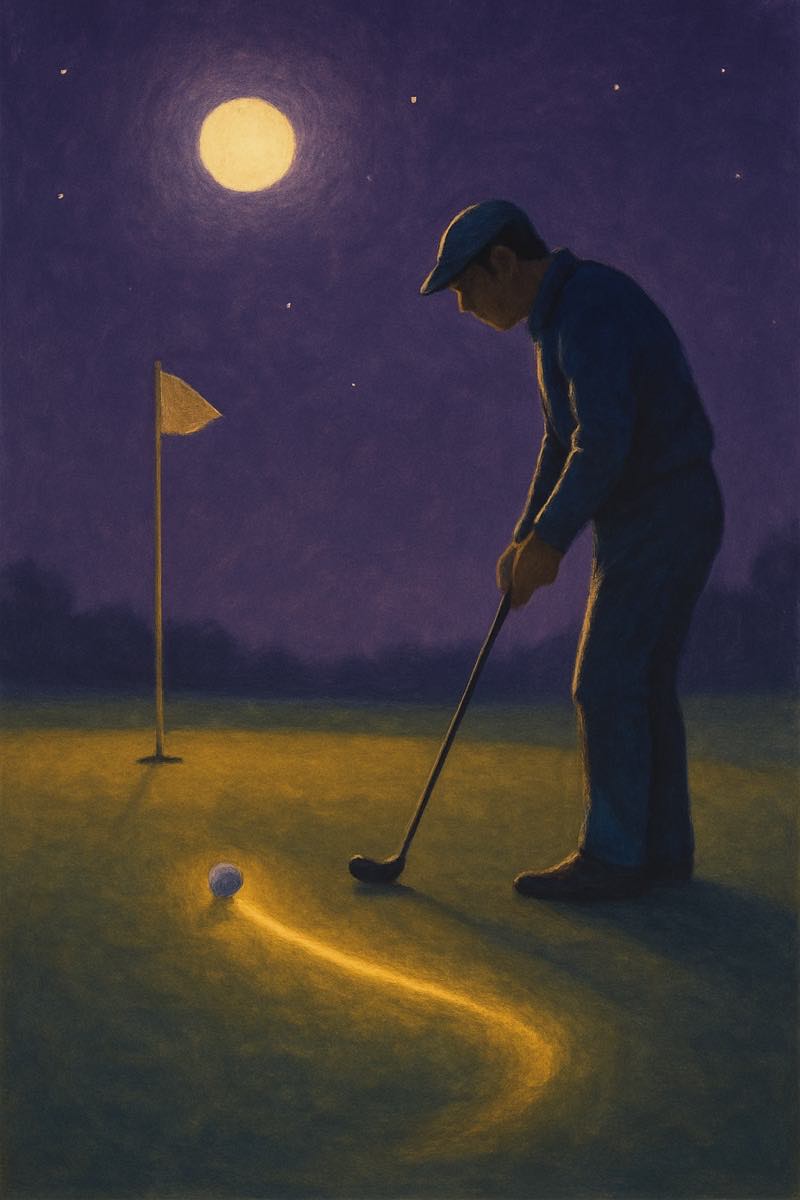
Golfers picked up the word in the late 1880s for the number of strokes a first-rate player should need on a hole or a course. An 1887 book, The Art of Golf, mentions doing a hole “in par figures.”
By the 1940s, ordinary life had a par too. “Par for the course” came to mean what you’d normally expect. Since most daily surprises are small annoyances, it usually shrugs at something that went wrong.