The story
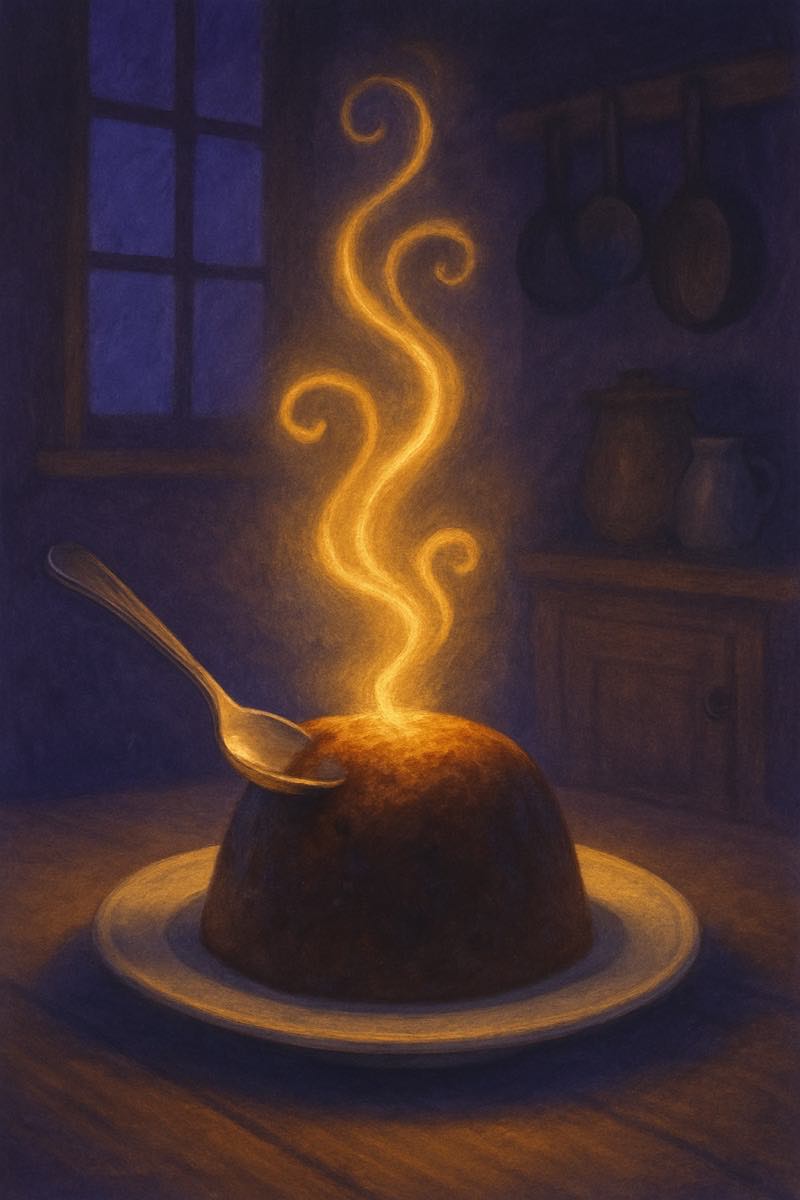
Today a pudding is a sweet dessert. Centuries ago in England, it was often something else: a savory mix of minced meat, suet, oats and seasoning, stuffed into a casing and boiled, much like a sausage.
You couldn’t tell much about a pudding like that by looking at it. Was it cooked through? Was it any good? The only way to know was to cut in and taste.
That is the heart of the original proverb: “the proof of the pudding is in the eating.” Here proof means test, the same sense as in a proving ground. The real test of food is how it tastes, not who made it or how it looks on the plate.
The saying was in print by the early 1600s. In 1615 the poet John Taylor wrote, “The proofe of pudding’s always in the eating.” Over time, as proof came to mean evidence, people trimmed the line down. The short version turns up in the 1860s, but it stayed fairly rare until the second half of the 20th century.