The story
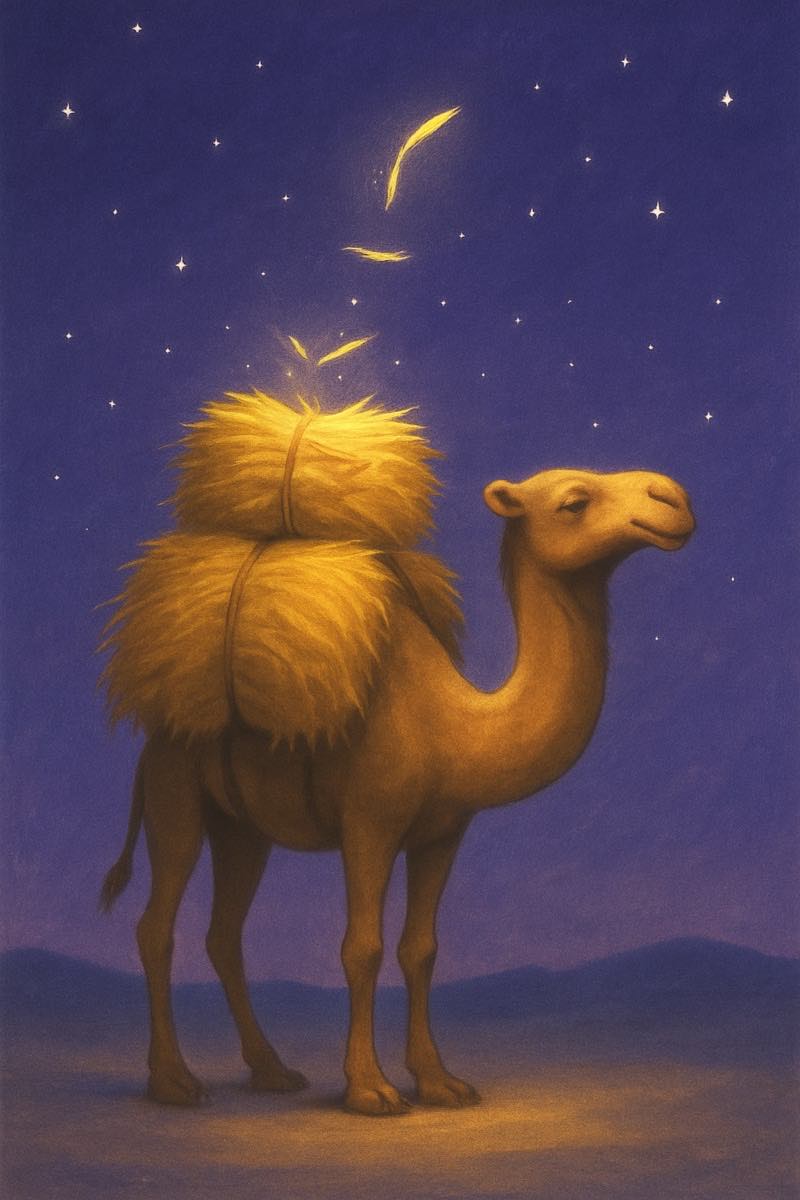
The idea is simple: pile on enough small loads, and one more tiny thing becomes too much. People have pictured it with different animals and different burdens.
In 1655, an English bishop, John Bramhall, wrote, “It is the last feather may be said to break an Horses back.” A feather, the lightest thing imaginable, finished off the strongest worker on the farm.
Over the next century or so, the animal and the load changed. By 1793 one writer had “the last feather will sink the camel,” and by 1799 a version with straw and camel was being called an Eastern proverb.
No one knows for sure why straw won out over feathers. One guess is that straw was a load animals really carried, so it made the picture feel more real.
Charles Dickens helped settle it. In Dombey and Son, published in the 1840s, he wrote, “As the last straw breaks the laden camel’s back.” The straw and the camel have carried the saying ever since.