
The story
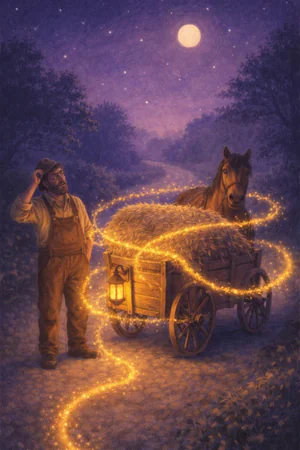
Anyone who has seen a horse and cart knows the order: horse in front, pulling, cart behind. Put the cart first and the horse has nothing to pull, so the trip goes nowhere.
English speakers were using this picture by the early 1500s, according to proverb dictionaries. Shakespeare played with it later in King Lear, where the Fool turns it around and asks about a cart that draws the horse.
In 1589, The Arte of English Poesie, a guide to good writing probably by George Puttenham, described the mistake of putting first what belongs last. He named it “the preposterous” and said that in English “we call it by a common saying to set the carte before the horse.” The Greeks, he noted, called it hysteron proteron.
Preposterous is the key. It comes from the Latin prae, “before,” and posterus, “coming after.” So the word literally describes having first what should come later. Over the centuries it drifted into today’s meaning: absurd.