The story
Please is a shortened courtesy. By the late 1300s, English speakers were softening requests with “if it please you,” meaning “if it gives you pleasure.” The verb itself had arrived around 1300, from Old French plaisir, “to please, to satisfy,” which goes back to the Latin placere, “to be acceptable, to be liked.”
Over time the phrase turned around. In “if it please you,” you were the one being pleased; in “if you please,” you started to sound like the one deciding. By the 1620s, people were simply saying “please” on its own, in front of a request. French still keeps the long form: s’il vous plaît.
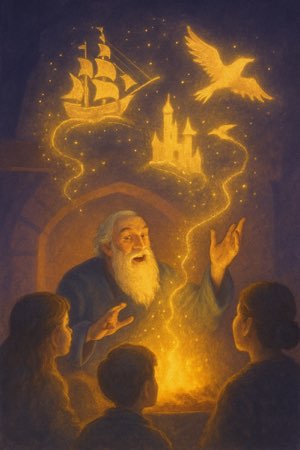
The idea of a word that opens doors is older than the habit of asking nicely. The most famous belongs to Ali Baba. In 1709, a young storyteller from Aleppo named Hanna Diyab told the tale aloud in Paris to the French scholar Antoine Galland, who added it to his French Arabian Nights. It appeared in print in 1717, with a hidden cave that opens to the words “Sésame, ouvre-toi”: “Open, Sesame.”
No one knows for sure why the password was sesame. One guess points to the sesame plant, whose ripe seed pod splits open on its own. Whatever the reason, the tale made “Open Sesame” the best-known magic password in the world.
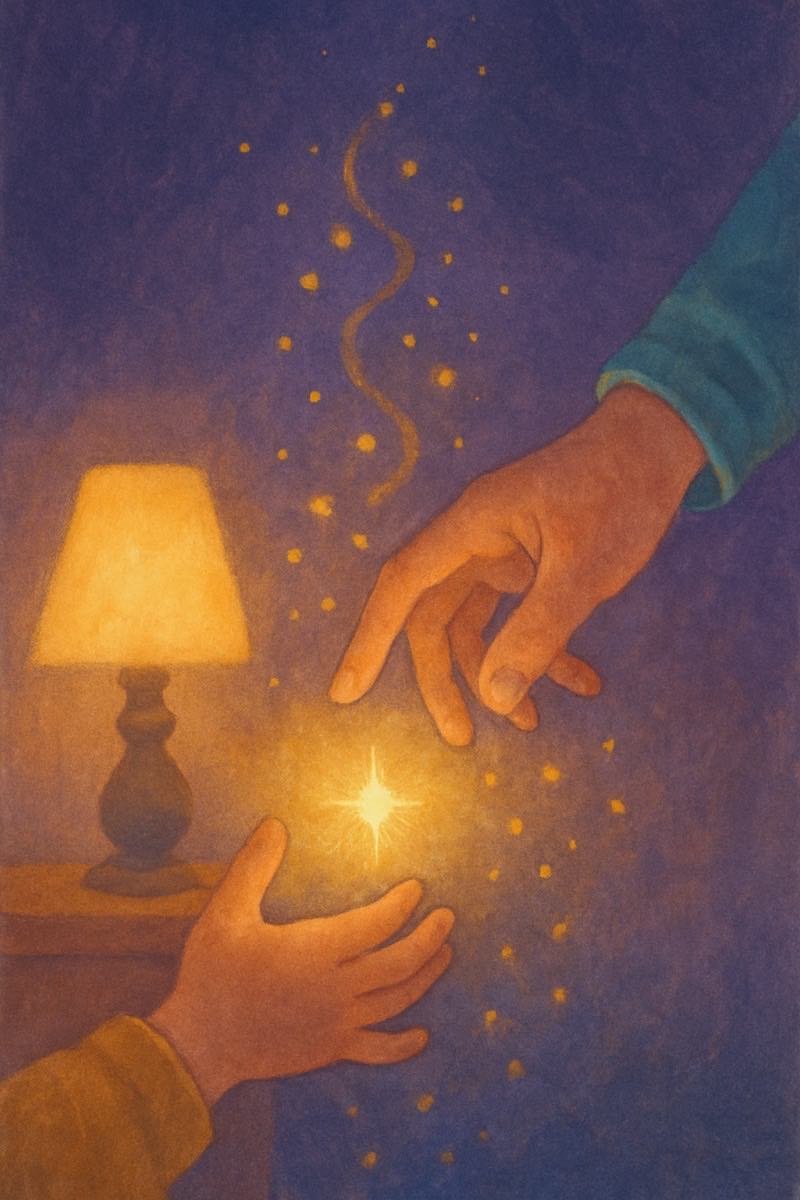
Somewhere along the way, parents joined the two ideas. Please became “the magic word,” the one that opens doors, and “What’s the magic word?” became the gentle nudge when it was forgotten. Word sleuths have not pinned down who first asked it, or when. For generations, the answer has been the same.