The story
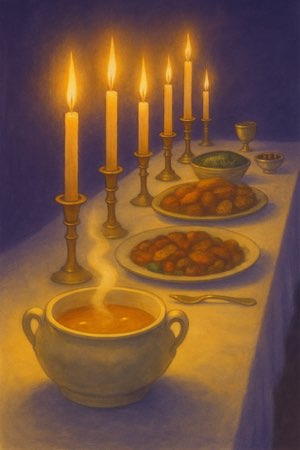
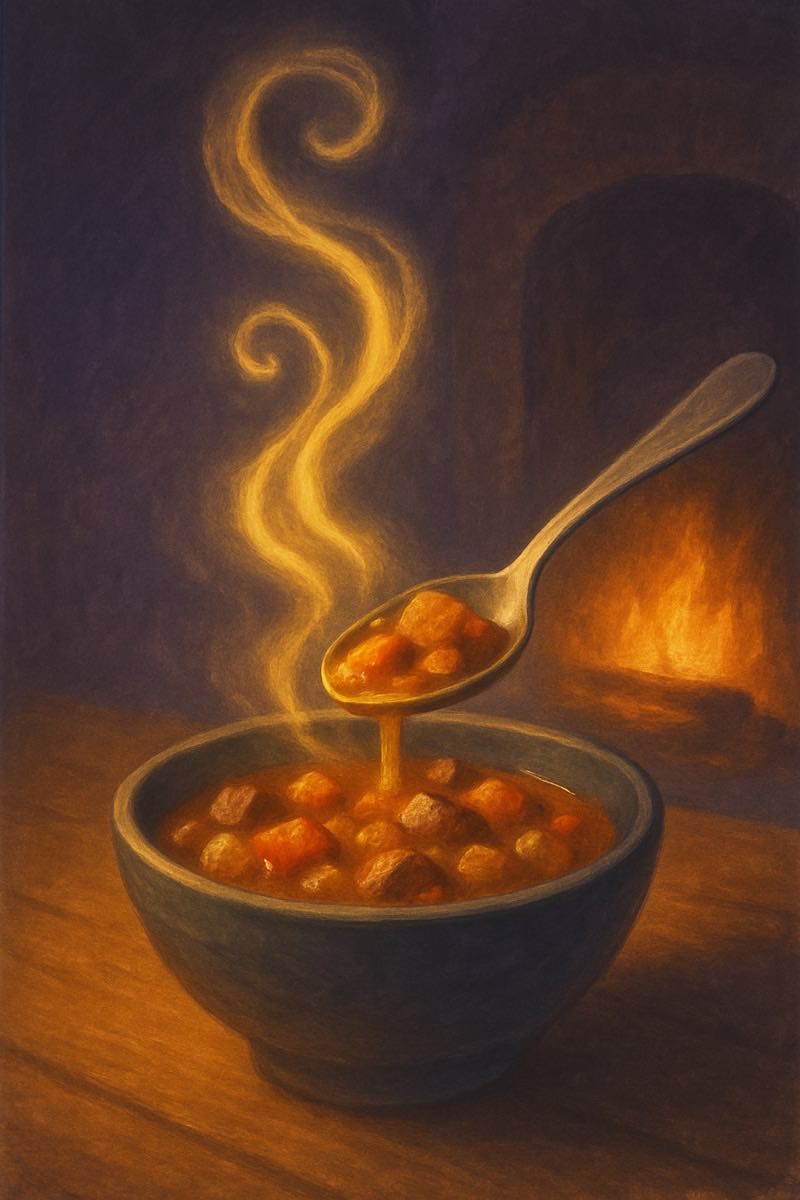
Picture a bowl of soup in the 1400s. If you found bones in it, you had to stop, pick them out and eat slowly. If there were no bones, it went down easily.
People turned that into a saying. In 1459, a friar named John Brackley wrote to John Paston, of the famous Paston family letters, that he “fond that tyme no bonys in the matere”—he found no bones in the matter. Nothing stuck in his throat.
By the mid-1500s, “find no bones” had become “make no bones.” A 1548 English translation of Erasmus described Abraham going ahead with a hard command: “He made no manier bones ne stickyng.” He didn’t hesitate at all.
The modern form, “make no bones about,” showed up in the late 1800s. An 1885 novel, Adrian Vidal by William Edward Norris, used it in today’s sense: to speak plainly and not dodge the point. The soup bowl had been forgotten, but the easy swallow remained.