The story
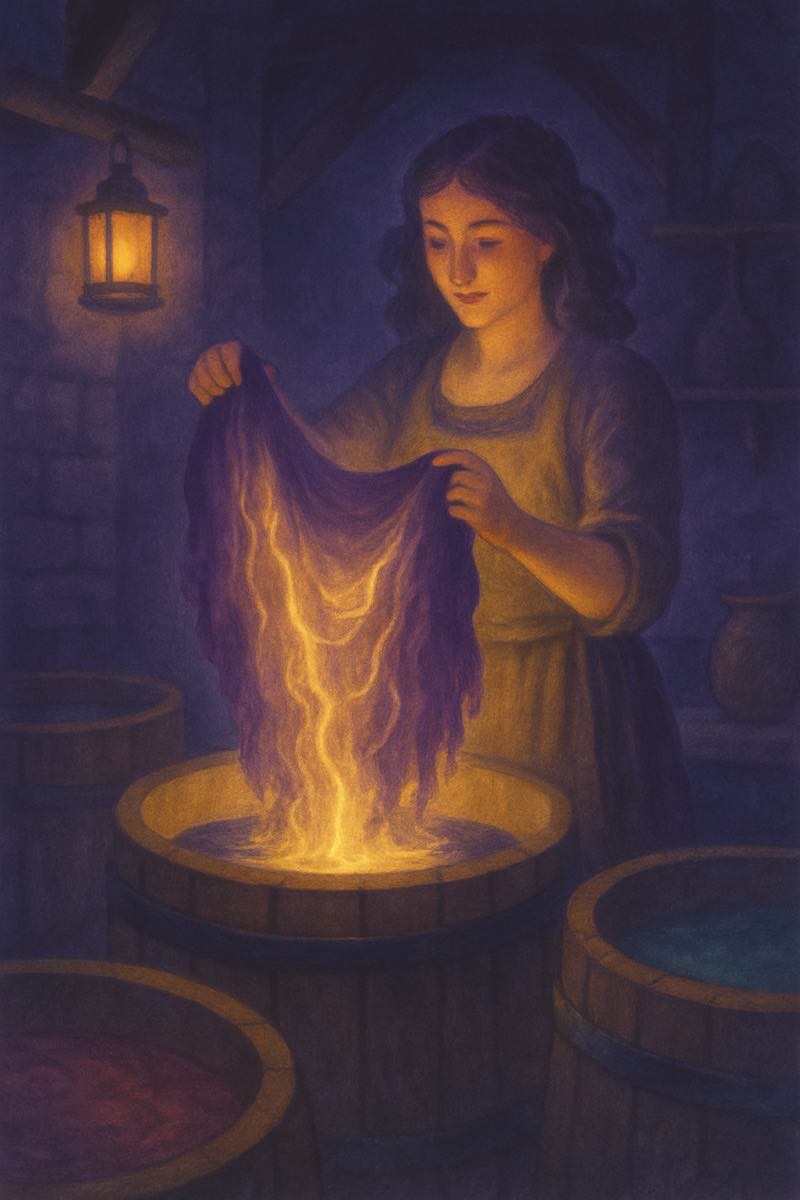
There’s more than one moment to add color to wool. It can be dyed as raw fleece, after it’s washed and combed but before it’s spun into yarn. Or the color can be added later, to the yarn or the finished cloth.
Dyeing it raw was the better way. The dye soaked into every fiber, and the color came out even and lasting. Cloth dyed later could fade or wash out much sooner.
Writers saw a lesson in that. In 1597, the English clergyman Richard Hooker wrote that “Children as it were in the Wooll of their infancie died with hardnesse may neuer afterwards change colour.” Habits taught early, he meant, sink in and stay.
From there, “dyed in the wool” came to describe anyone whose character or beliefs run all the way through. A dyed-in-the-wool fan or gardener or New Englander isn’t going to change.
The phrase can be fond or a little teasing, depending on who says it. Either way, it means the color goes all the way to the core.