The story
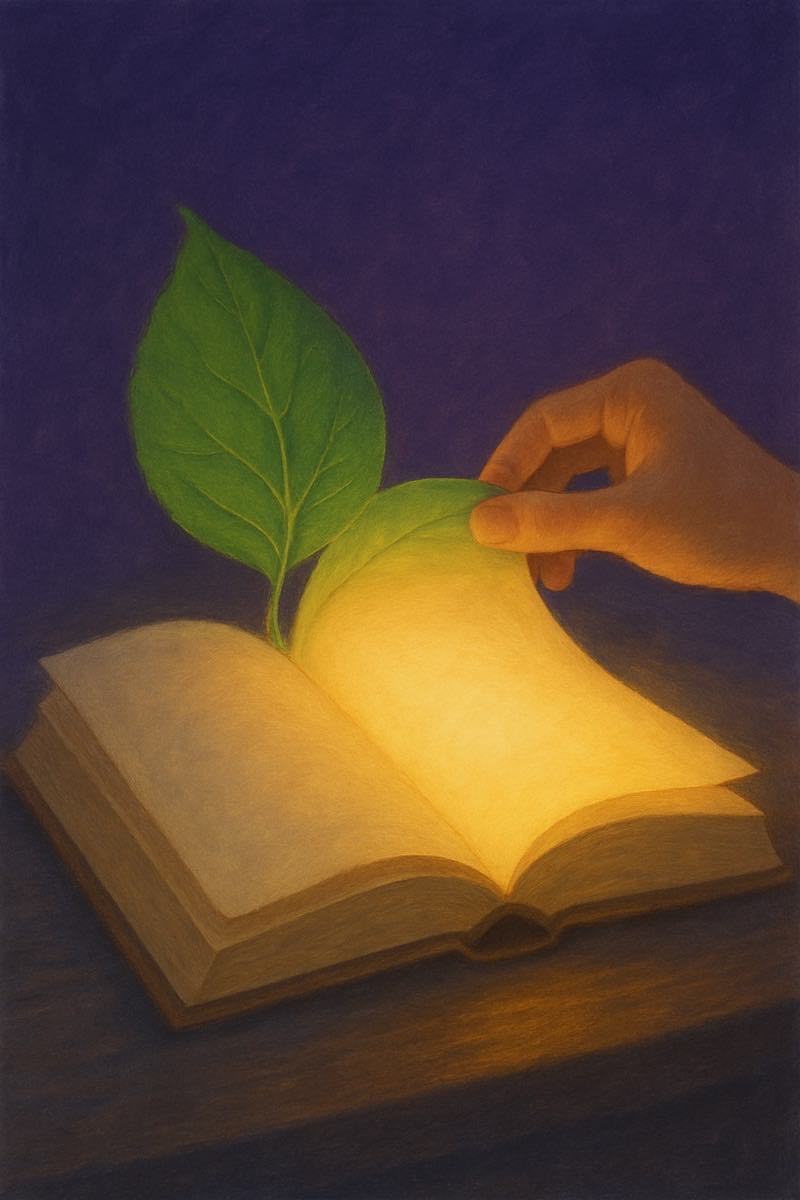
In this phrase, a leaf isn’t from a tree. It’s an old word for a sheet in a book, the same leaf we still see in leaflet and loose-leaf paper.
Turning over a leaf simply meant turning the page. Geoffrey Chaucer used it that way in The Canterbury Tales in the late 1300s. Before a rowdy story, he tells readers who would rather skip it: “Turne over the leef and chese another tale.”
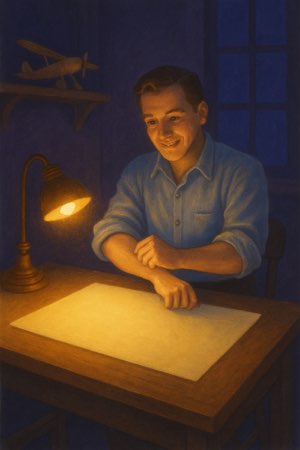
By the late 1500s, the page had become a picture of a person’s life. Turning over a leaf, and later a new leaf, meant leaving the old page behind and starting fresh on a clean one, with a promise to do better.
The saying has stayed hopeful ever since. In this picture the old page isn’t torn out or erased. It is still there, just turned behind, and the next page is waiting blank.