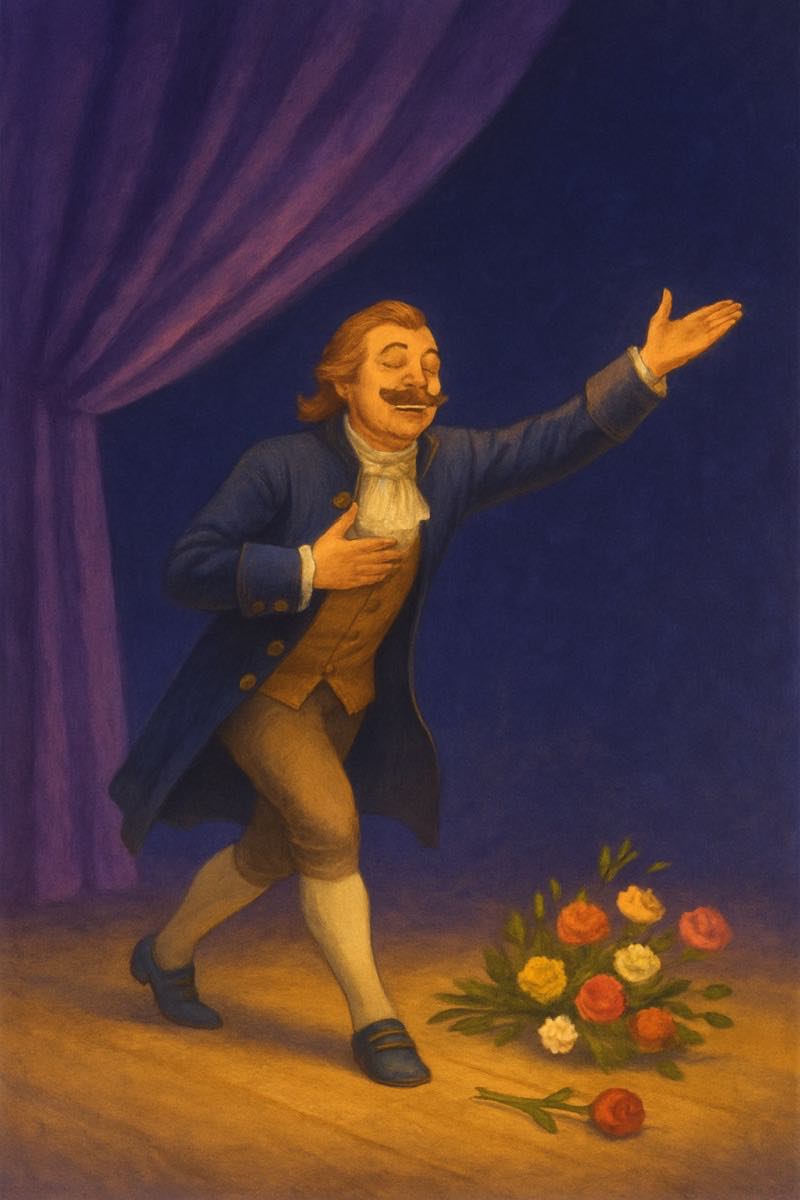
The story
Theater people are famously superstitious. Many believe that wishing someone “good luck” before a show tempts fate, so they wish for something dreadful instead and let the opposite come true.
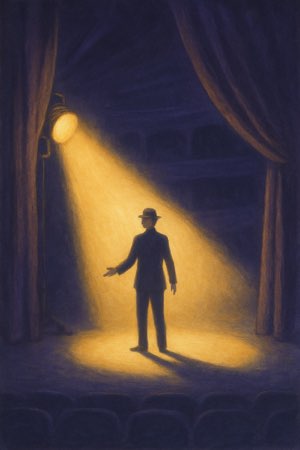
Superstition runs deep backstage. Many theaters leave a single bare bulb, the ghost light, burning on the empty stage overnight, and many actors won’t say the name “Macbeth” inside a theater unless they are performing it. A cheerful “good luck” belongs on that list of things best left unsaid.
No one knows for sure where the words began. A leading guess points to German, where Hals- und Beinbruch—“neck and leg break”—is an old good-luck wish, used by aviators by the time of the World Wars. It may have crossed into American theater by way of German-speaking performers.
Another idea points to Yiddish, which has a similar-sounding wish, hatsloche un broche, “success and blessing.” Others say a great show ends with bended knees in a deep bow. That one is charming, but most word historians find it unlikely.
The earliest known printing in a theater setting is Edna Ferber’s 1939 memoir, A Peculiar Treasure. She describes understudies “politely wishing the various principals would break a leg.” Today it is the friendly backstage send-off, with no ill will at all.