The story
The exact words come from a play. In 1839, the English writer Edward Bulwer-Lytton wrote Richelieu; Or the Conspiracy, about the powerful French cardinal who ran the government for King Louis XIII.
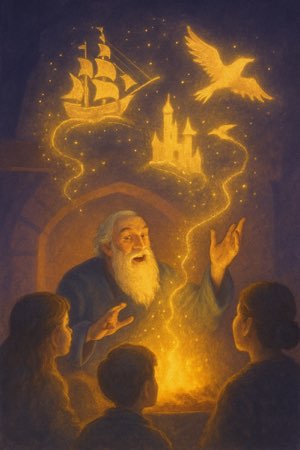
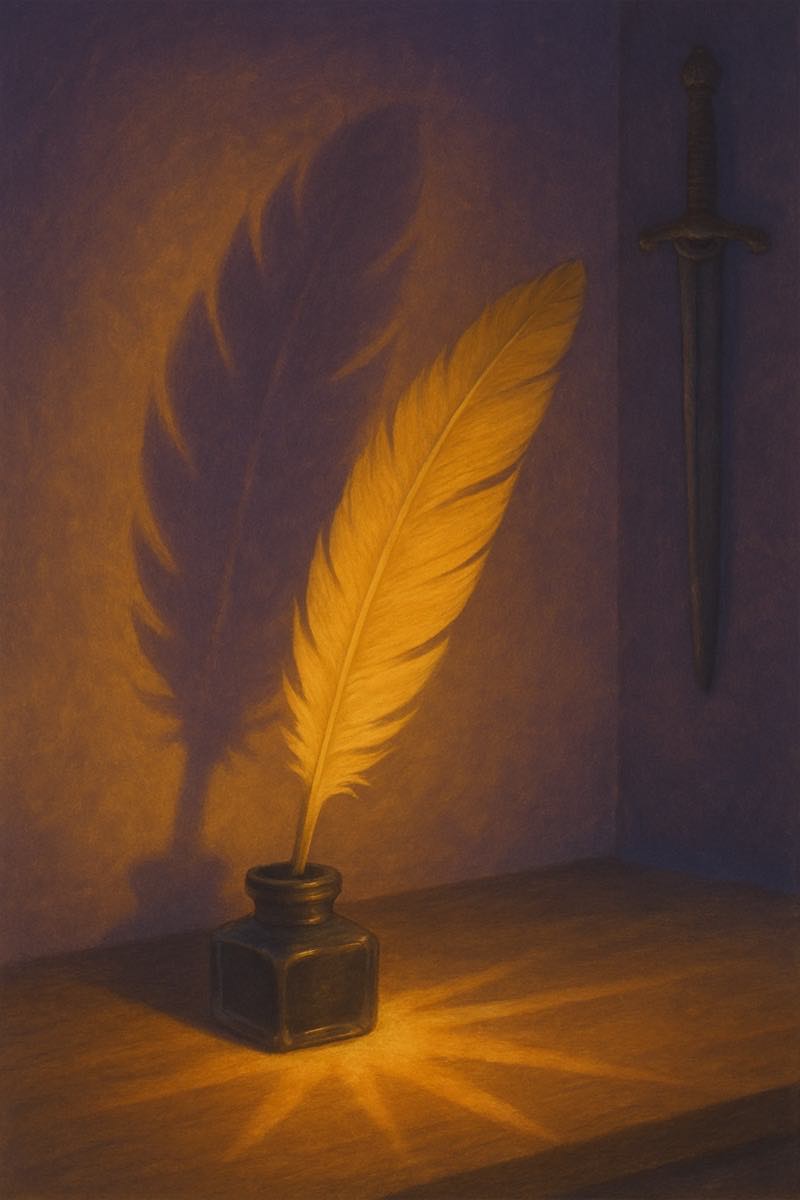
In Act II, the cardinal finds he cannot fight his enemies with weapons. Instead he turns to writing, and declares: “The pen is mightier than the sword.” He calls the pen “the arch-enchanter’s wand,” a nothing on its own, but magic in a master’s hand.
The play opened at London’s Covent Garden Theatre in March 1839, and Queen Victoria went to see it a week later. The line outlived the play by a mile.
The idea itself is much older. An ancient Middle Eastern sage named Ahiqar was credited with “The word is mightier than the sword.” In Hamlet, Shakespeare joked that “many wearing rapiers are afraid of goosequills”—swordsmen who feared what writers would say about them.
Bulwer-Lytton gave us something else, too. His 1830 novel Paul Clifford opens with “It was a dark and stormy night.” So one man left behind both a great line and the most famous cliché in fiction.