The story
In 1718, a London comedy called The Coquet gave a servant named Ranger a joyful reunion. Overcome, he cries, “I shall jump over the Moon for Joy! Master, my dear Master, have I found you!”
Jumping over the moon was a fitting picture for happiness too big to stay on the ground. Other writers of the 1700s used it too. One spoke of people who “would cut a caper over the moon” on happy occasions.
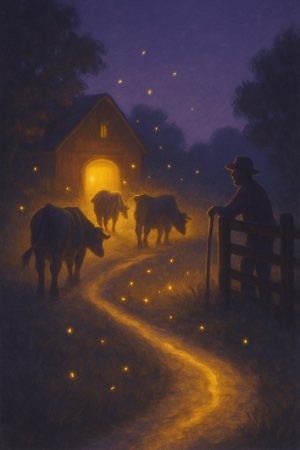
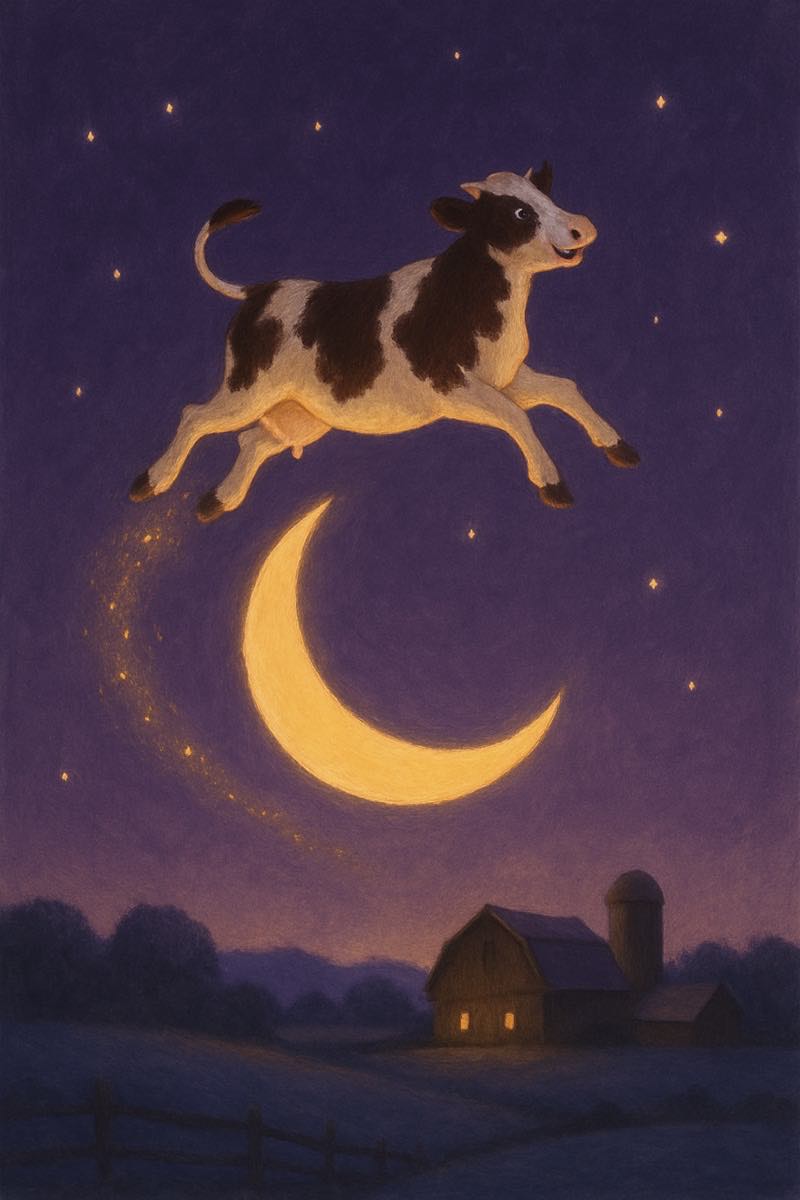
Then came the cow. The nursery rhyme “Hey Diddle Diddle” was printed in London around 1765, and its cow that jumped over the moon became one of the best-known images in children’s verse.
The longer form hung on for a while. In 1840, the Canadian humorist Thomas Chandler Haliburton described someone “ready to jump over the moon for delight.”
Over time, the jump quietly dropped away. In 1857, Lady Cavendish wrote in her diary that her family, hearing of a new baby brother, “were at first utterly incredulous and then over the moon.”