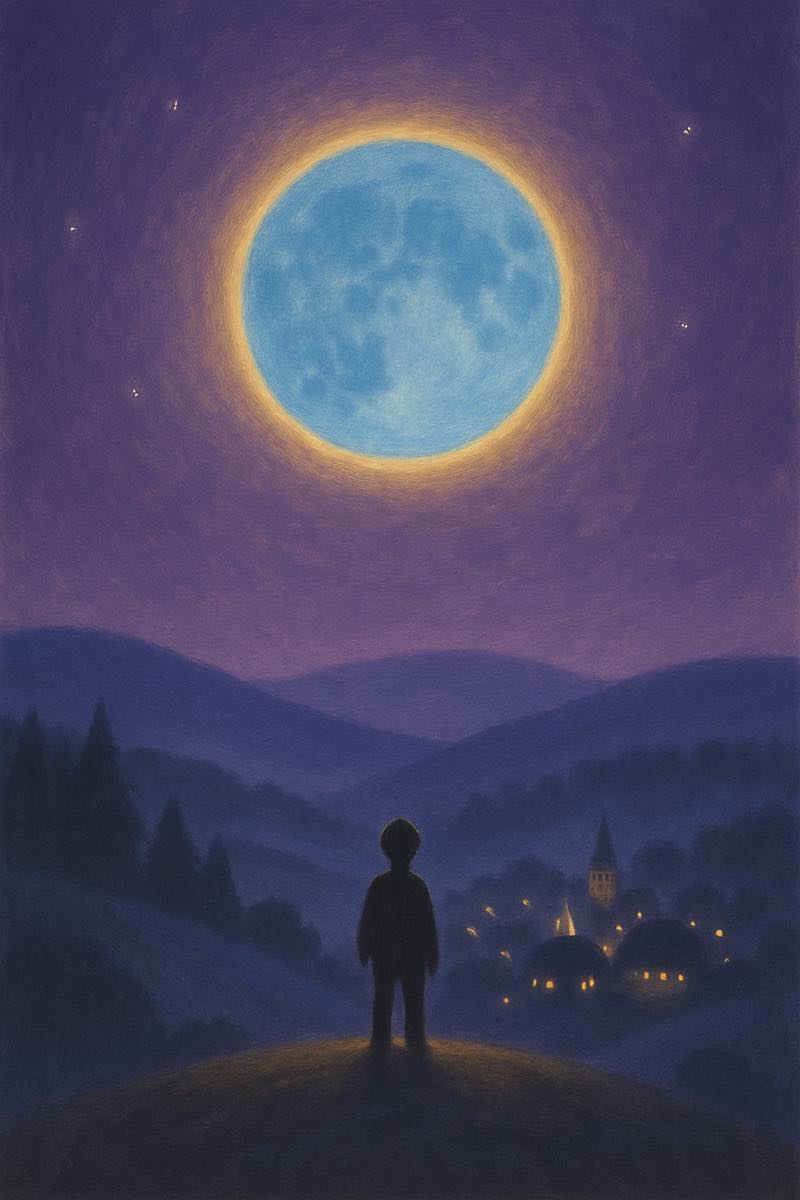
The story
In the 1500s, “the moon is blue” was shorthand for something absurd. A 1528 rhyme mocks people who will believe anything: “Yf they saye the mone is belewe, / We must beleve that it is true.”
By the 1800s, a blue moon had come to mean a very long time. Pierce Egan’s 1821 Real Life in London has the line “haven’t seen you this blue moon.” From there it was a short step to “once in a blue moon”: hardly ever.
The astronomy came later. The Maine Farmers’ Almanac used “blue moon” for an extra full moon: the third of four in a single season. In 1946, an amateur astronomer writing in Sky & Telescope misread that rule and called a blue moon the second full moon in a calendar month.
The mistake caught on. By that newer definition, a blue moon now really does come around, every few years.